
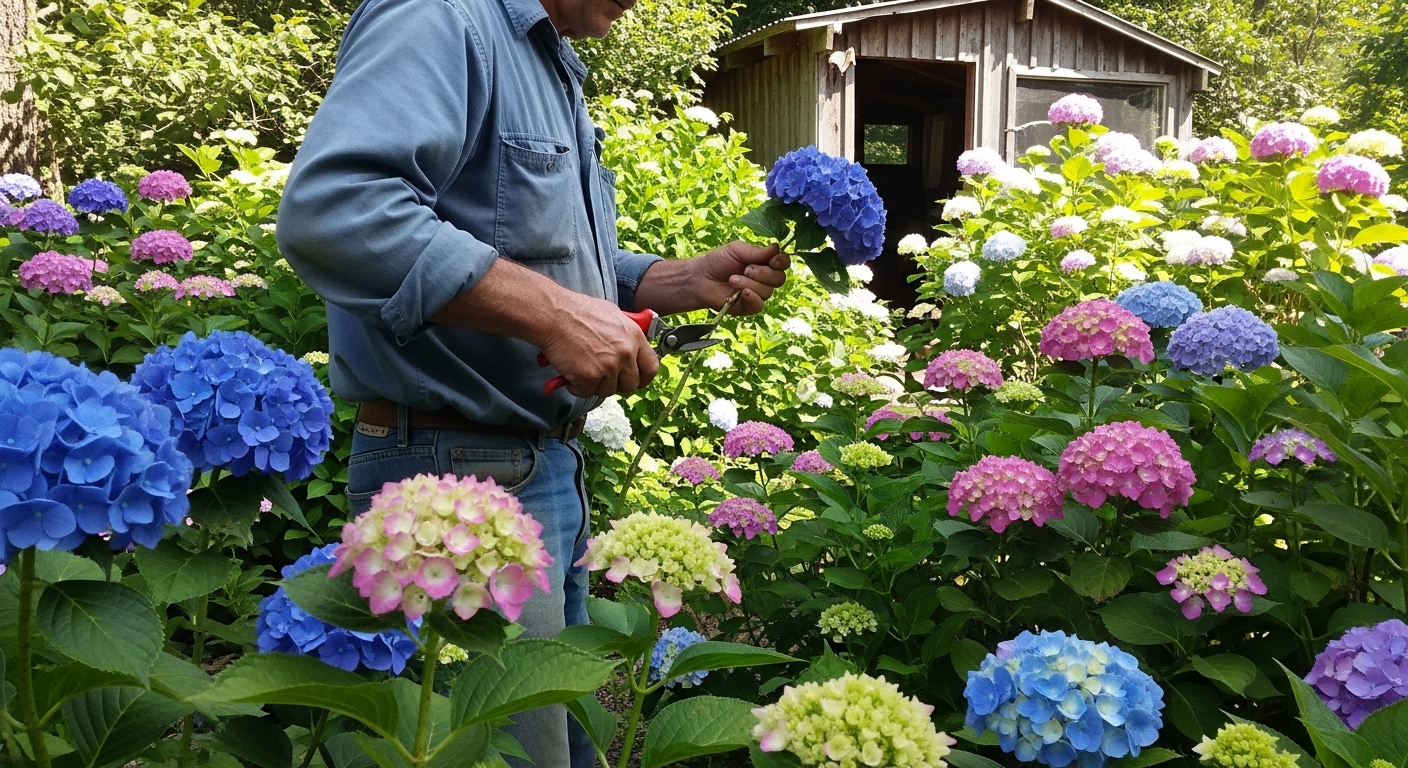
Have you ever excitedly waited for your hydrangeas to bloom—only to be met with nothing but green leaves and silence?
The culprit might be a simple pruning mistake. One wrong snip at the wrong time, and poof—no blooms for an entire year!
Don’t worry. You’re not alone. Pruning hydrangeas can feel confusing and overwhelming—especially with all the different varieties out there. But here’s the good news: once you understand what type of hydrangea you have, pruning becomes straightforward, even enjoyable.
In this complete and easy-to-follow guide, you’ll learn:
-
How to identify your hydrangea type
-
When and how to prune each one
-
The top mistakes to avoid
-
Insider tips to keep your hydrangeas thriving year after year
Let’s take the mystery out of hydrangea pruning once and for all.
Contents
Why Pruning Hydrangeas Matters
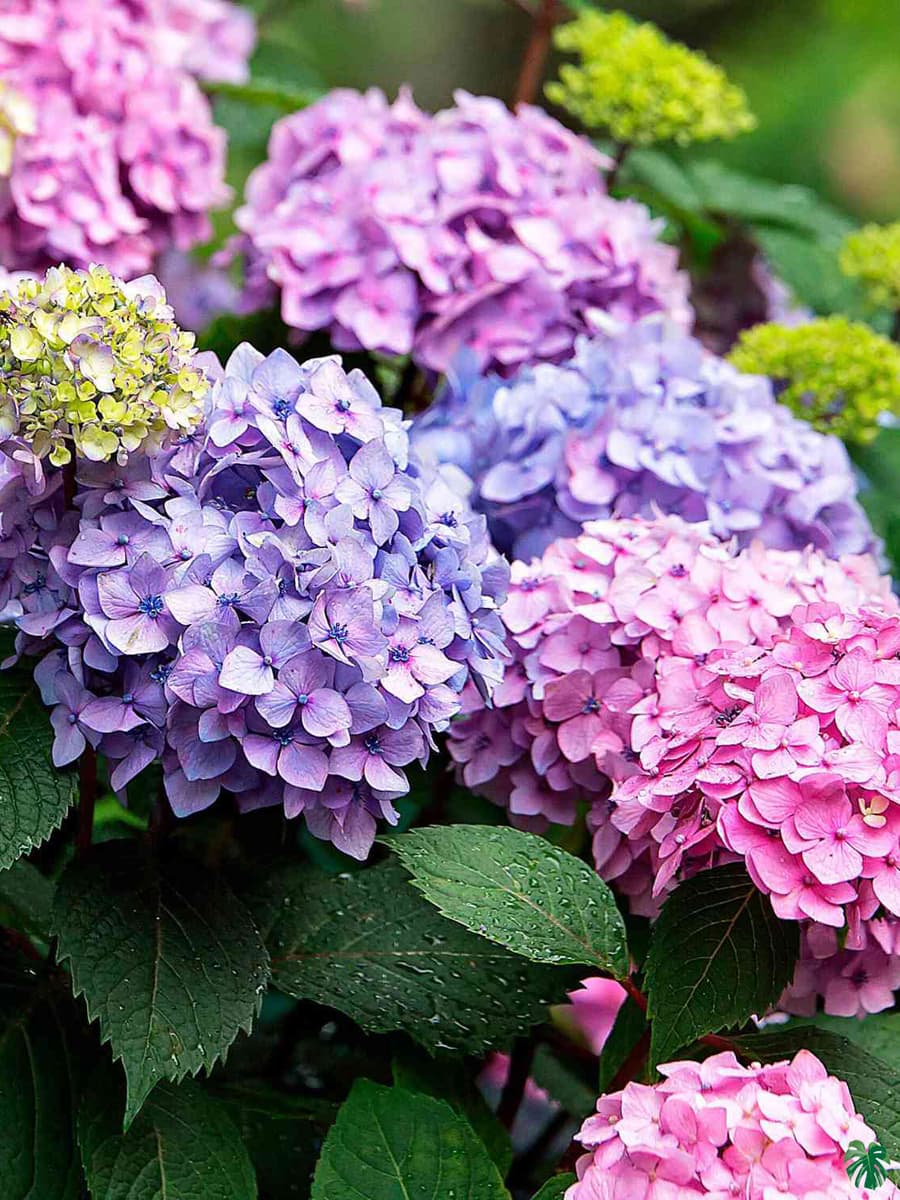
Pruning is more than just shaping your plant—it directly affects whether or not your hydrangea blooms. Some types bloom on old wood (last year’s growth), while others bloom on new wood (this year’s growth). Cutting back the wrong stems at the wrong time could mean sacrificing all your flowers.
Identify Your Hydrangea Type
Before you prune anything, you need to know what type of hydrangea you’re dealing with. Here’s how to tell them apart:
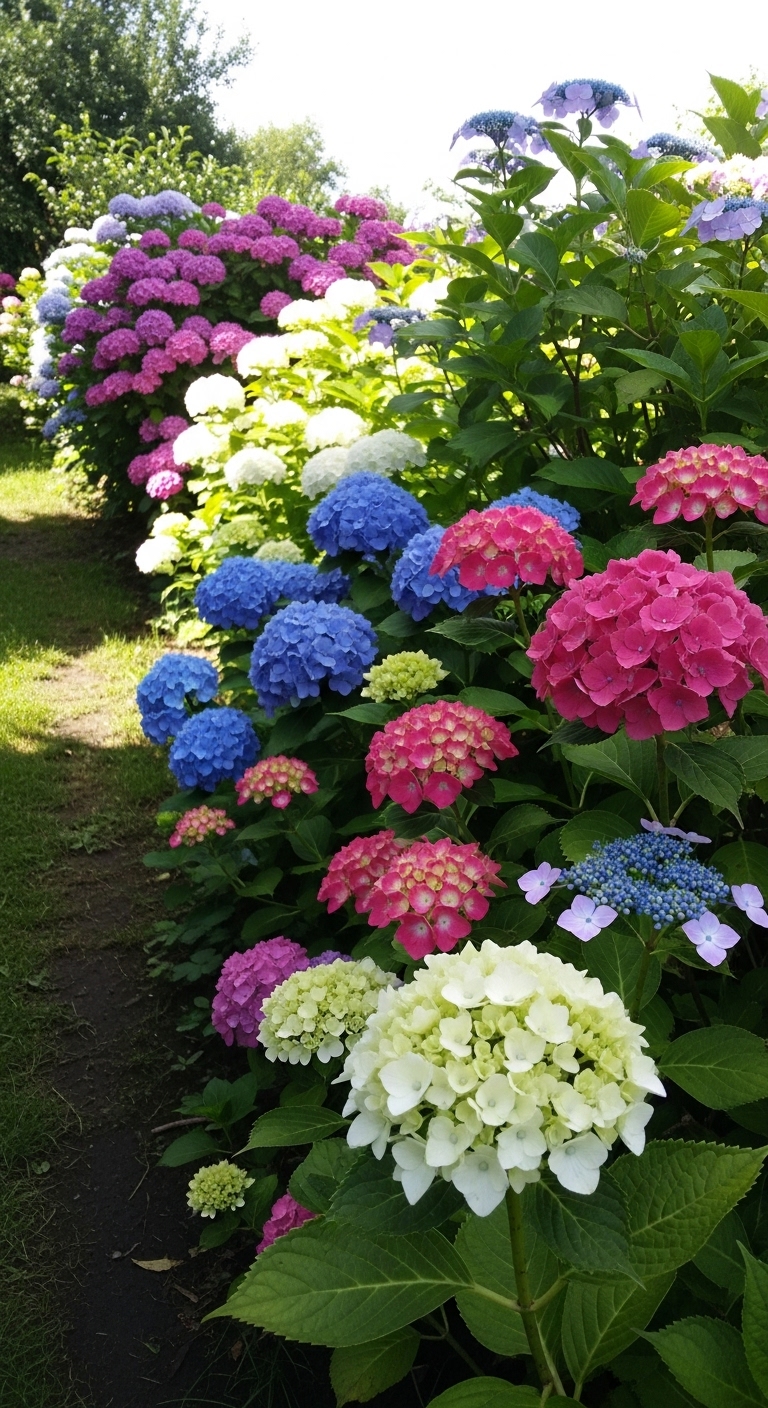
1. Mophead & Lacecap Hydrangeas (Hydrangea macrophylla)
Bloom Time: Summer
Blooms On: Old wood (some modern varieties bloom on both)
Appearance:
-
Mopheads: Large, rounded, colorful blooms (blue, pink, purple)
-
Lacecaps: Flat centers with a ring of larger flowers
-
Glossy, ovate leaves with thick stems
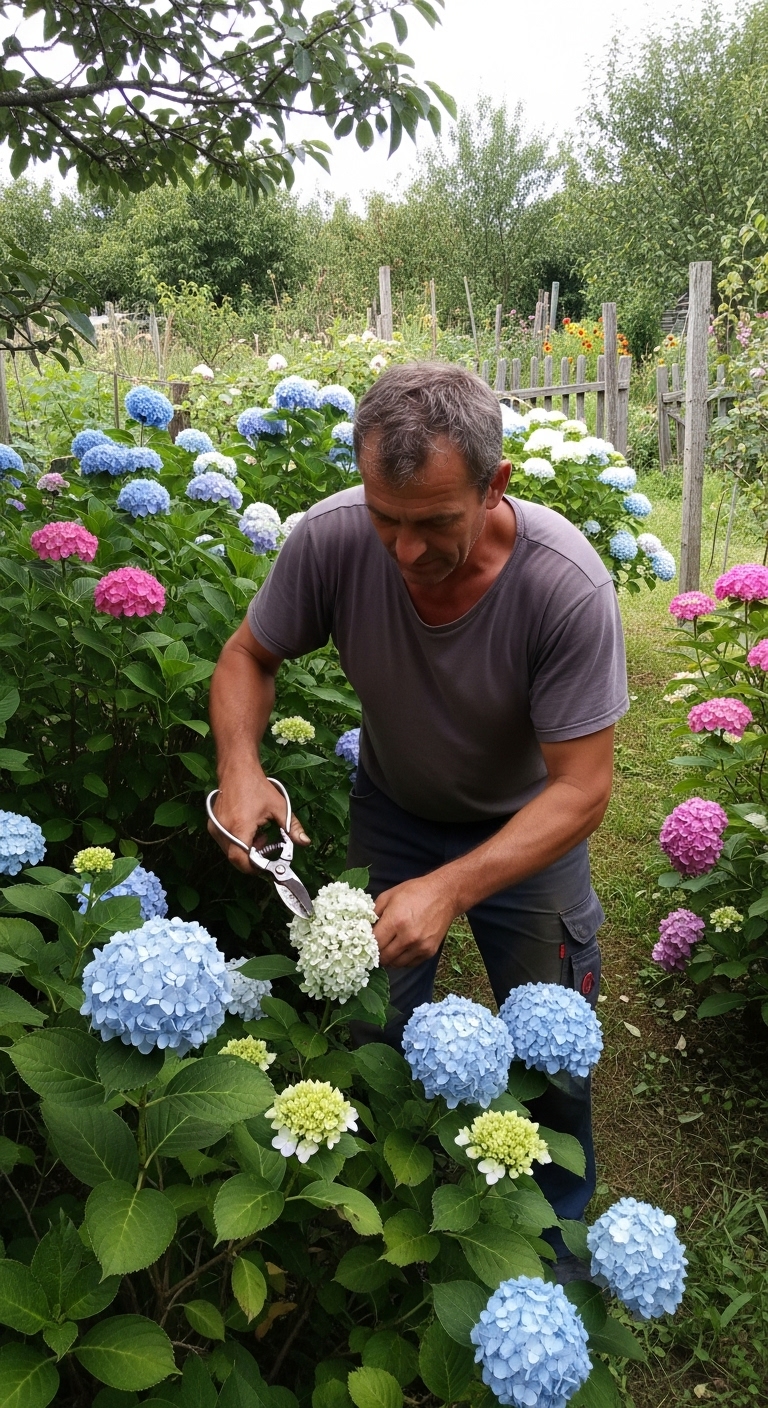
Popular Varieties: Nikko Blue, Pink Beauty, Endless Summer, Let’s Dance series
How to Prune:
-
✂️ Prune only after blooming—late summer is best
-
❌ Avoid spring pruning; it removes flower buds
-
✅ Remove dead/damaged stems in early spring
-
💡 New reblooming types are more forgiving but still benefit from careful pruning
2. Smooth Hydrangeas (Hydrangea arborescens)
Bloom Time: Early to mid-summer
Blooms On: New wood
Appearance:
-
Round white or pink flowers (baseball to basketball size)
-
Thin, floppy stems
-
Heart-shaped, soft leaves
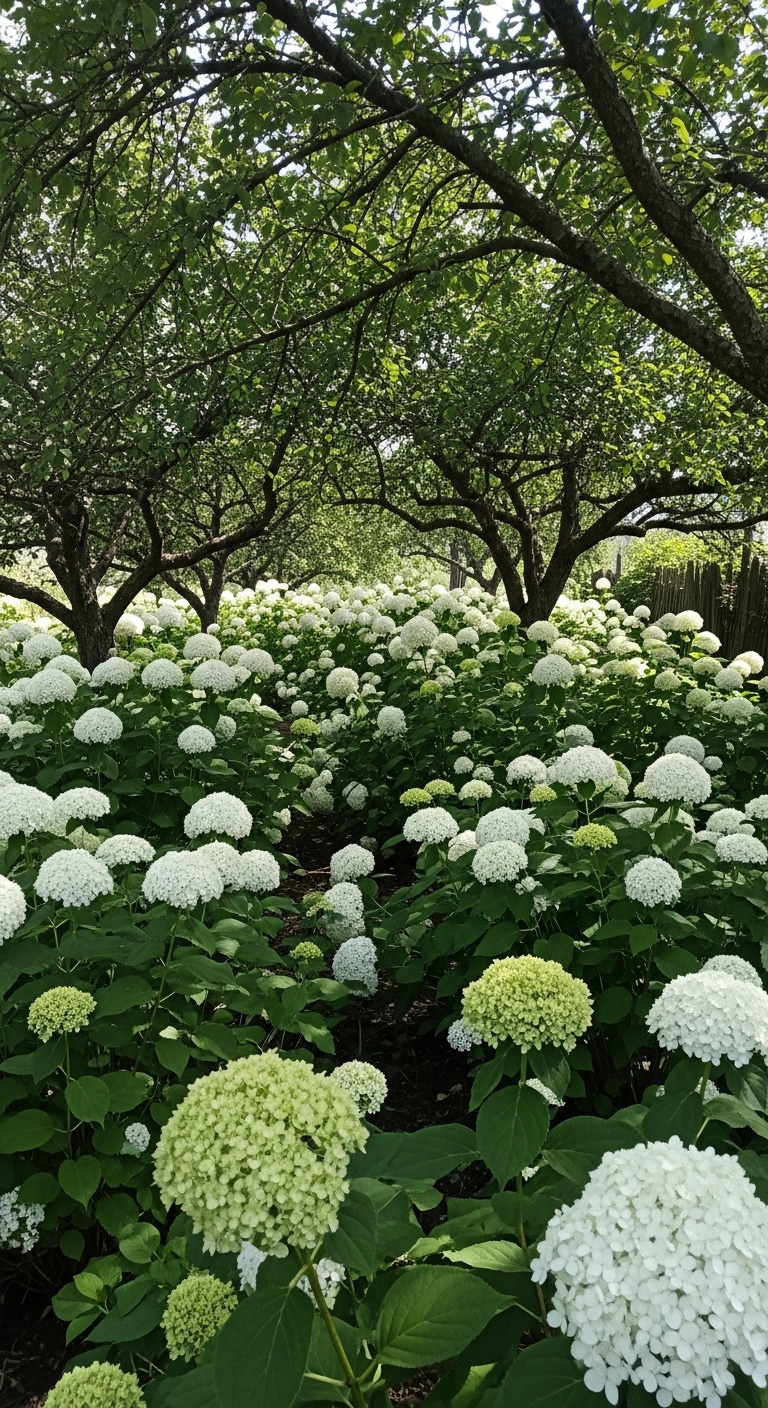
Popular Varieties: Annabelle, Incrediball, Invincibelle
How to Prune:
-
✂️ Prune hard in late winter or early spring
-
✅ Cut back to 15–18 inches above the ground
-
✅ Remove dead, damaged, or crossing branches
-
🔍 Use the scratch test: green inside = alive; brown/brittle = dead
Pro Tip: These are very forgiving—great for beginners!
3. Panicle Hydrangeas (Hydrangea paniculata)
Bloom Time: Summer into fall
Blooms On: New wood
Appearance:
-
Cone-shaped flowers, starting white and aging to pink/red
-
Very strong, thick stems
-
Egg-shaped leaves with serrated edges
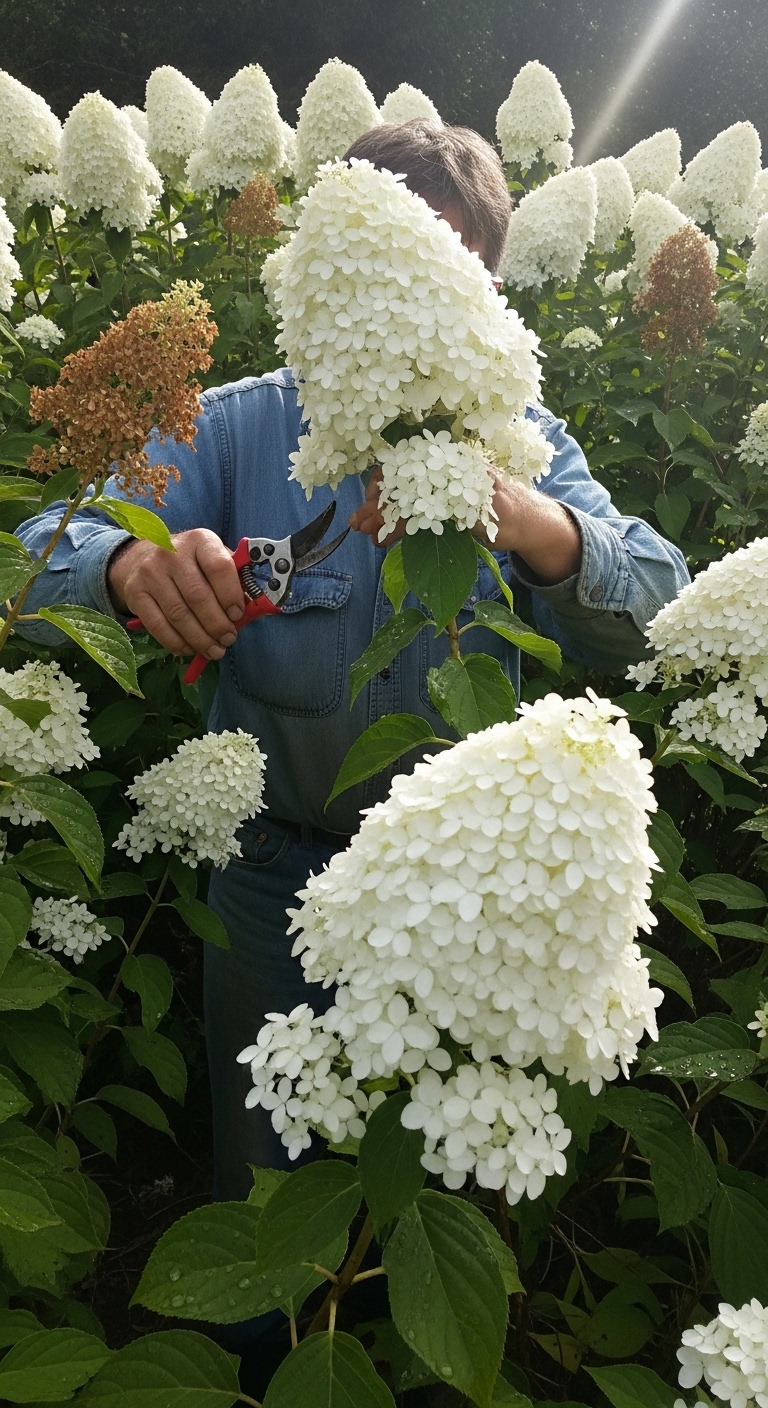
Popular Varieties: Limelight, Quick Fire, Bobo
How to Prune:
-
✂️ Prune in late winter to early spring
-
✅ Cut no more than 1/3 of the top growth
-
✅ Remove spindly branches smaller than a pencil
-
✅ Always cut above a bud
Pro Tip: Want smaller size? Don’t over-prune—panicles still grow big!
4. Oakleaf Hydrangeas (Hydrangea quercifolia)
Bloom Time: Early summer
Blooms On: Old wood
Appearance:
-
Large oak-shaped leaves that turn red/purple in fall
-
Thick, peeling bark (adds winter interest)
-
Cone-shaped blooms that fade pink over time
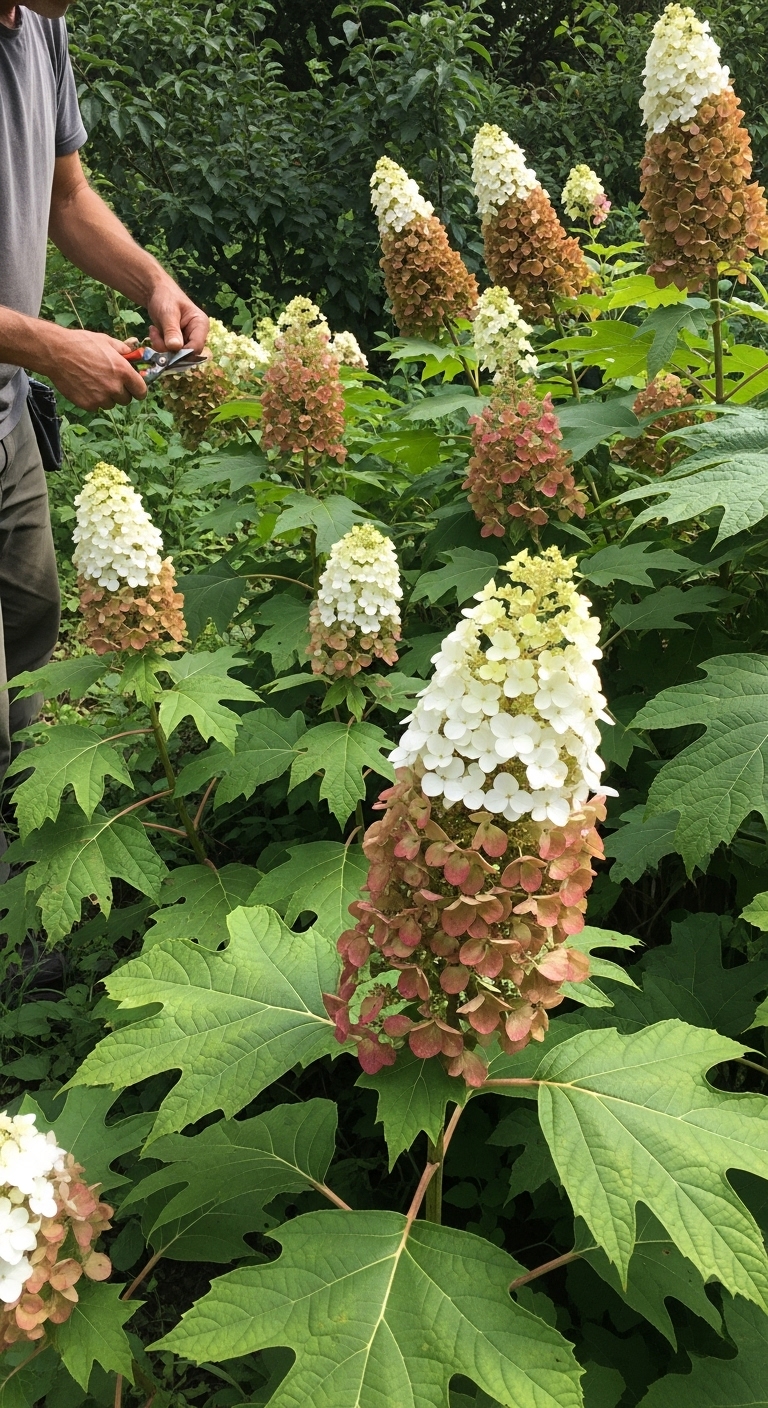
Popular Varieties: Snow Queen, Alice, Gatsby series
How to Prune:
-
✂️ Prune right after flowering in mid-summer
-
❌ Never prune in fall or spring (you’ll lose buds)
-
✅ Minimal pruning needed unless shaping is required
Pro Tip: These can get big—choose a variety that fits your space.
Real-Life Mistakes Gardeners Make (And How to Avoid Them)
Let’s be honest—pruning confusion is everywhere. Here are common errors we’ve seen:
-
Cutting back mopheads in spring → no blooms!
-
Pruning oakleafs in fall → a whole year lost!
-
Ignoring dead stems on smooth hydrangeas → tangled, messy growth
-
Over-pruning panicles → still grow tall, just with fewer blooms
Avoid these, and your garden will thank you.
Bonus Tips for Hydrangea Success
-
🌡 Colder climates? Choose reblooming varieties like Endless Summer to offset late frosts
-
☀️ Full sun or part shade? Most hydrangeas prefer morning sun and afternoon shade
-
🌧 Water consistently during bloom time for fuller, longer-lasting flowers
-
🌿 Leave spent blooms through winter—they add charm and protect the buds
Conclusion: Prune with Confidence, Not Fear
Once you understand your hydrangea, pruning is no longer a guessing game—it becomes a smart, strategic act that brings you lush, colorful blooms year after year.
No more stress. No more lost flowers. Just thriving, happy plants.
