
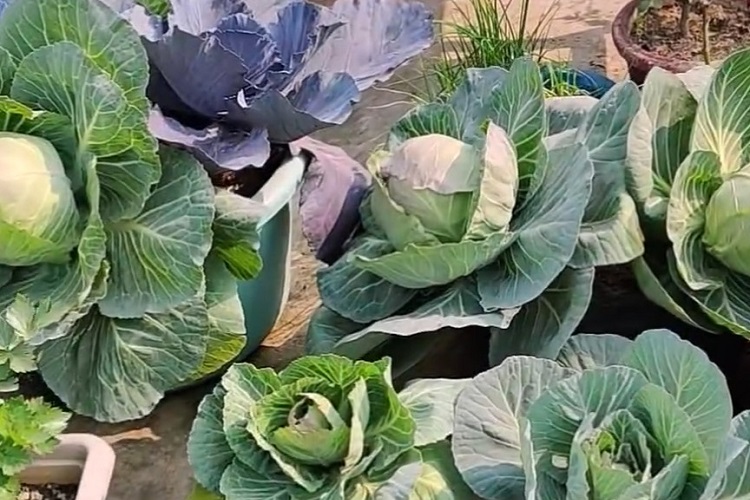
Thinking of growing your own cabbage at home in pots? Let me show you how I do it, from planting the seeds to harvesting full heads! Cabbage grows so well in containers, especially in cooler months. With the right soil, light, and care, you’ll be amazed how simple and satisfying it is. Let’s walk through each step together in this complete guide!
Contents
- 1 Best Time to Plant Cabbage in Containers
- 2 How to Start Cabbage from Seeds Indoors or Outdoors
- 3 Cabbage Seed Germination and Early Care Tips
- 4 How to Transplant Cabbage Seedlings into Pots
- 5 How to Care for Cabbage Plants in Pots
- 6 When and How to Harvest Cabbage Grown in Pots
- 7 Common Cabbage Growing Problems in Containers
- 8 Final Thoughts
Best Time to Plant Cabbage in Containers
Let’s begin by choosing the right time. Timing makes a big difference when it comes to healthy growth and bigger cabbage heads.
Cabbage Growing Season and Ideal Temperatures
Cabbage thrives in cooler climates. I always plant my seeds between September and December, when temperatures stay between 10°C and 30°C.
The ideal range is 7°C to 25°C. If it’s too hot, cabbage might bolt or go to seed too early.
Why Grow Cabbage in Pots at Home
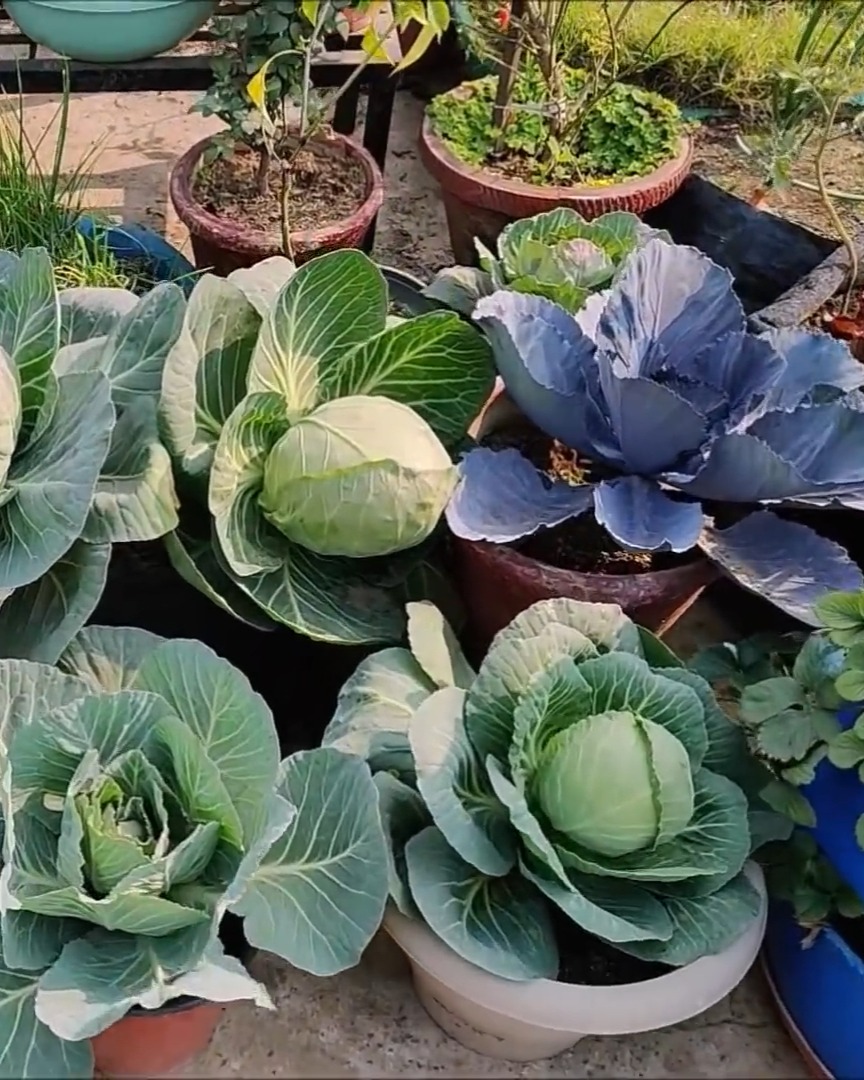
I love growing cabbage in pots! It fits perfectly into small spaces like balconies or patios. Container gardening also lets me control the soil quality and avoid common garden pests more easily.
And the best part? Watching those leafy heads form up close!
How to Start Cabbage from Seeds Indoors or Outdoors
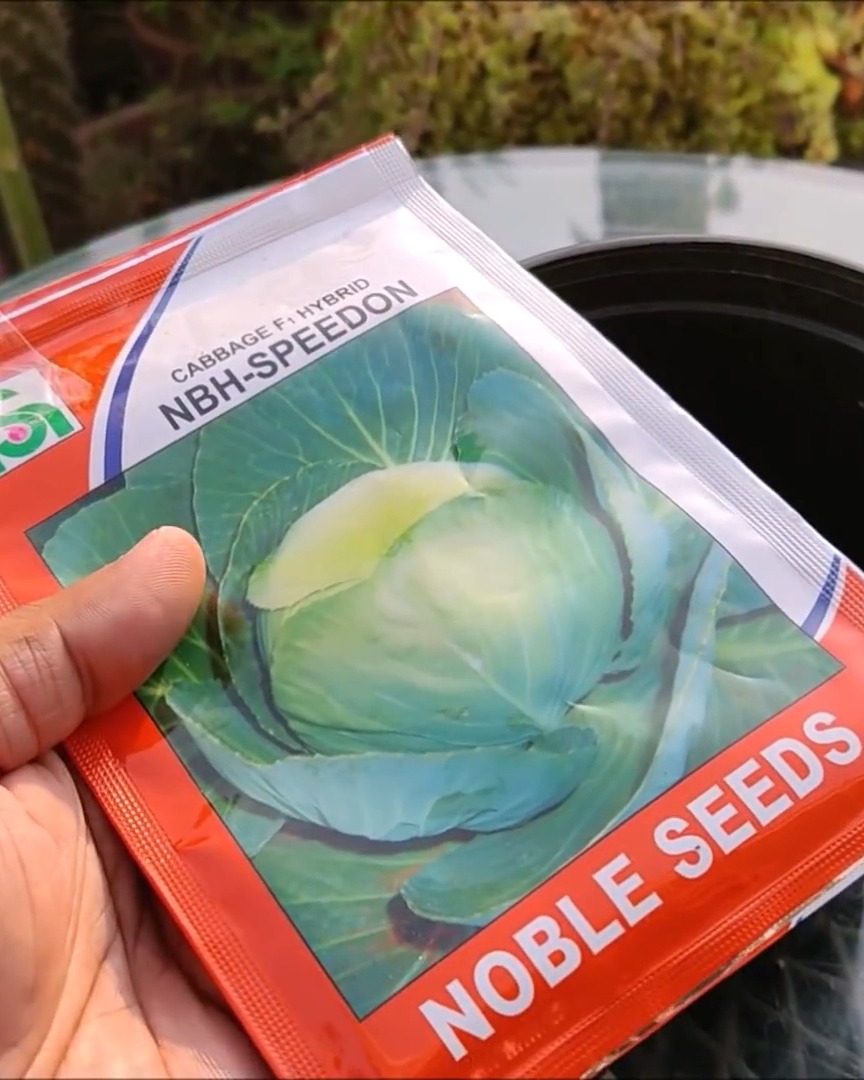
Once the season’s right, it’s time to start the seeds. I always begin with good-quality seeds and a custom soil mix.
High-quality seeds are key to success. I only use trusted sources.
DIY Cabbage Seed Starting Mix for Pots
You can make your seed starting mix at home. Here’s my go-to recipe:
- 40% garden soil
- 30% compost
- 30% cocopeat
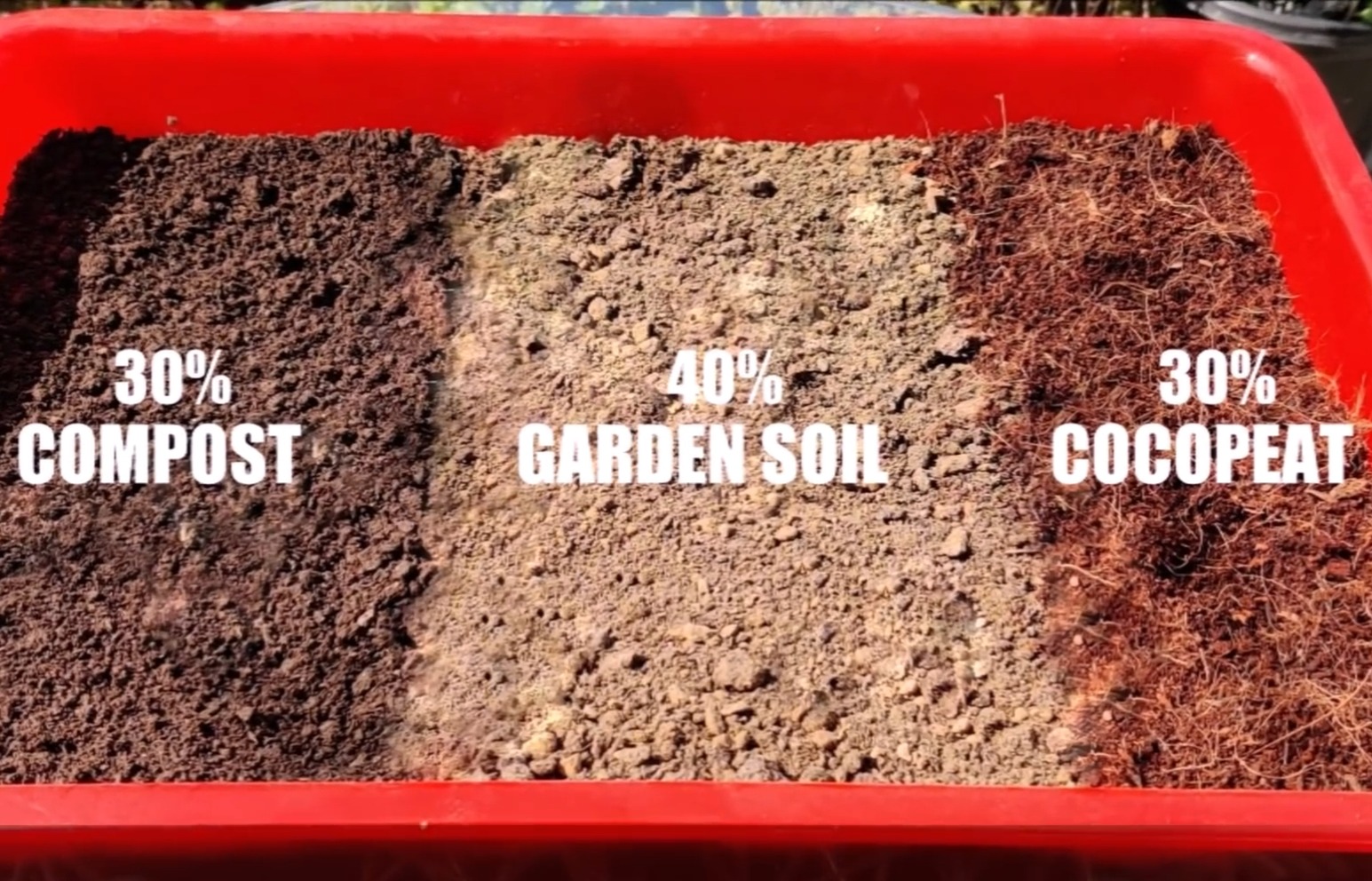
This mix provides nutrients, good drainage, and moisture retention. I always make sure the pot has drainage holes to prevent waterlogging.
How to Plant Cabbage Seeds in Pots
I begin by filling a small pot with the mix, then pressing it down to remove air pockets and make the surface flat. I spray a light water mist to moisten the soil, then sprinkle the seeds evenly.
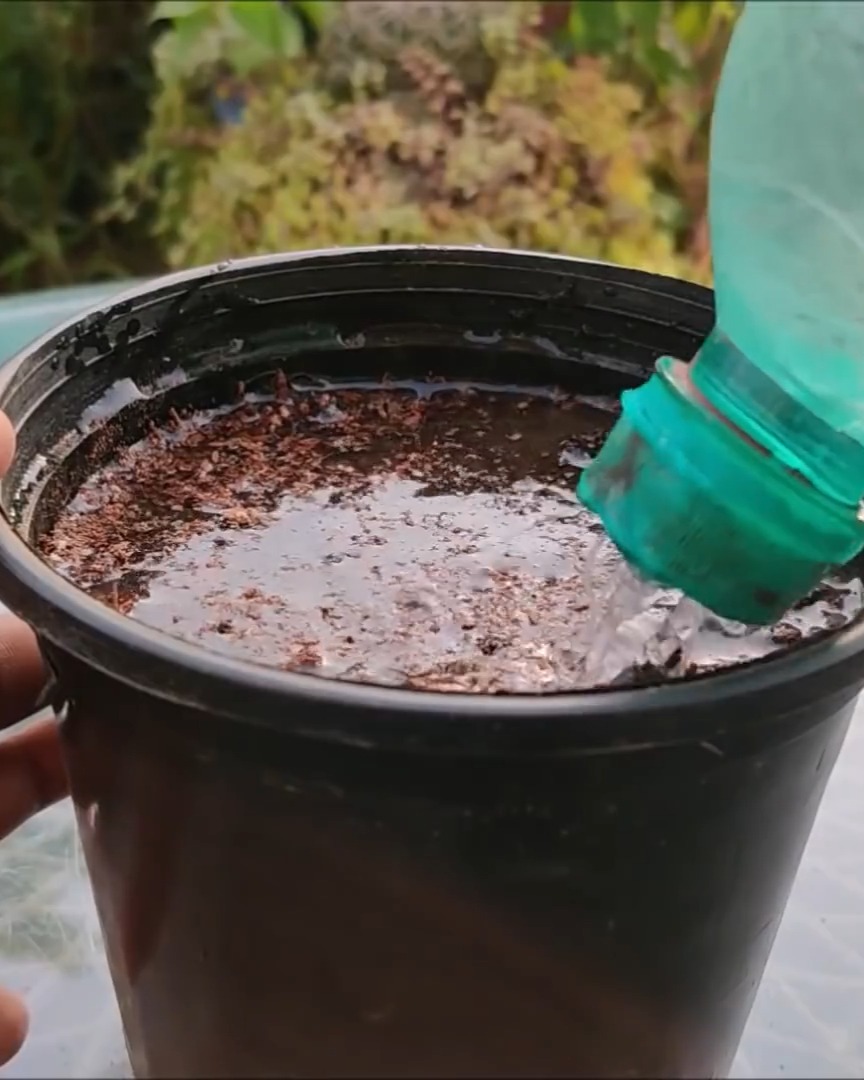
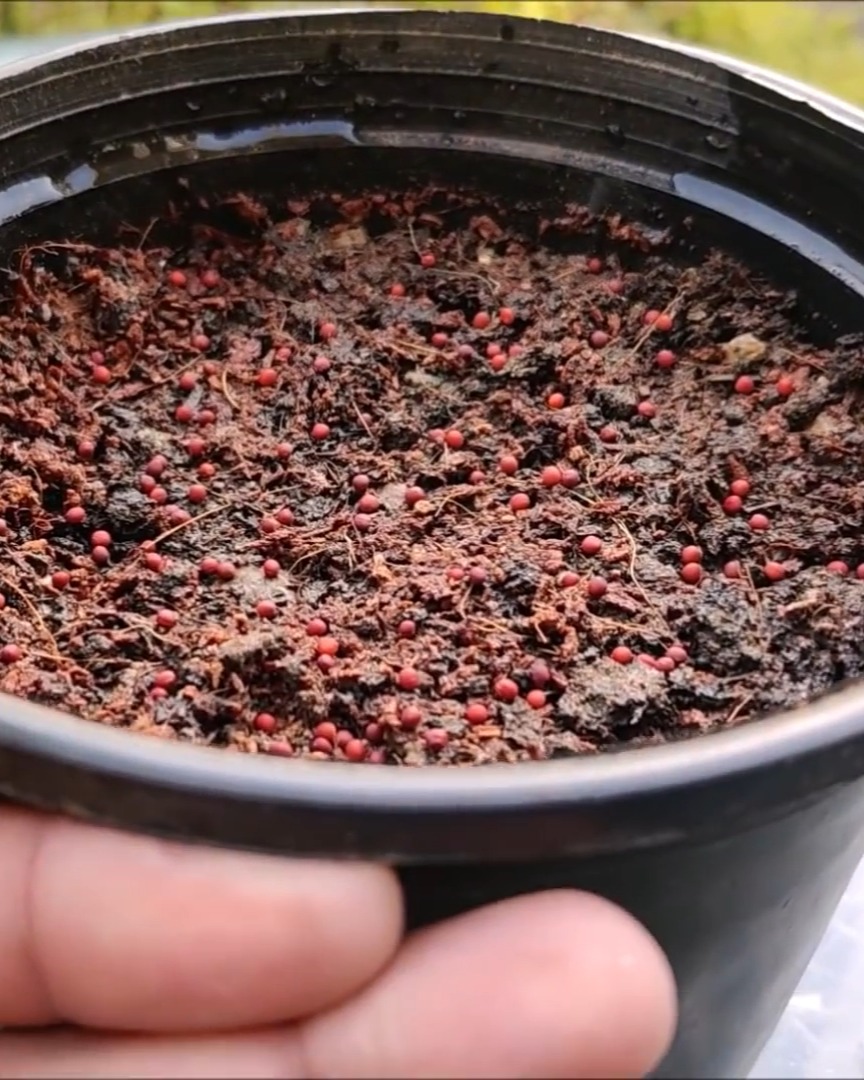
After that, I cover the seeds with a thin layer of the same mix. I gently pat it down to ensure good seed-to-soil contact, then water lightly using a gentle shower.
I place the pot in a spot with about 4–5 hours of sun daily.
Cabbage Seed Germination and Early Care Tips
The next step is waiting for the seeds to sprout. This stage needs patience and consistent care.
Ideal Temperature for Cabbage Seed Germination
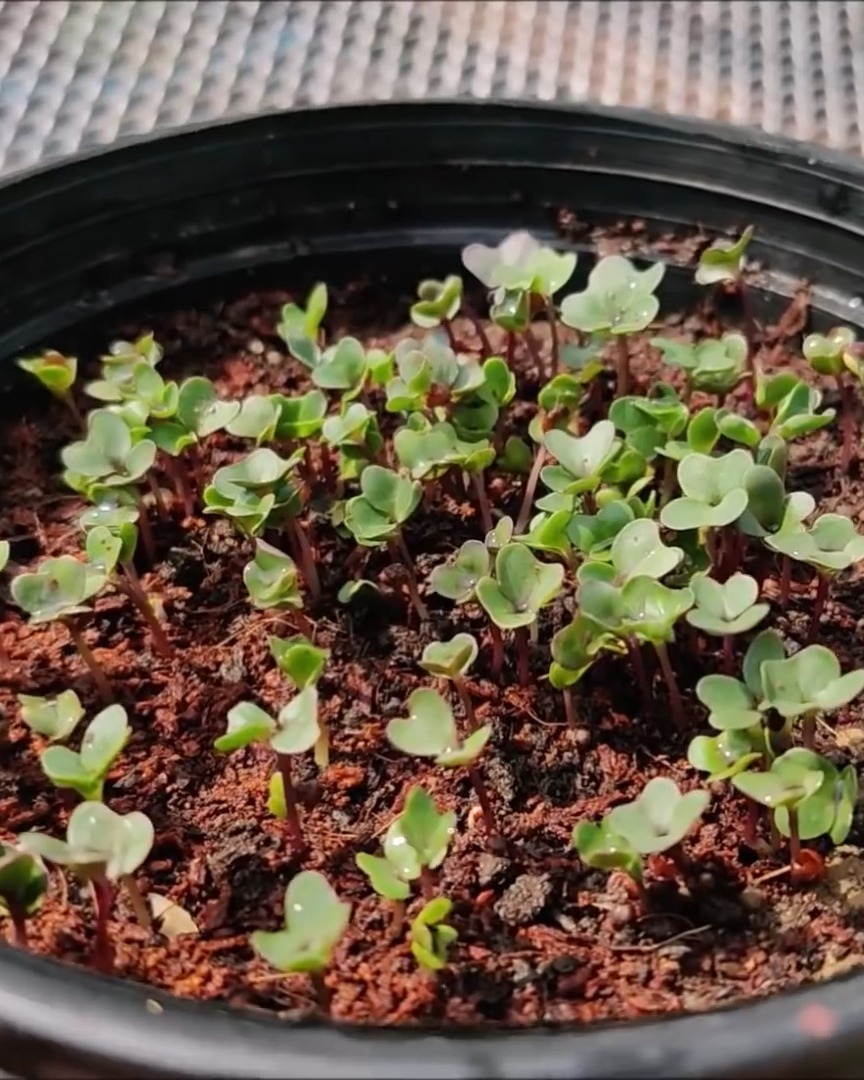
Cabbage seeds germinate fast if the temperature is correct: 10°C to 28°C works best. I usually see the first sprouts in just 5 to 7 days!
Watering Cabbage Seedlings Correctly
Day 8:
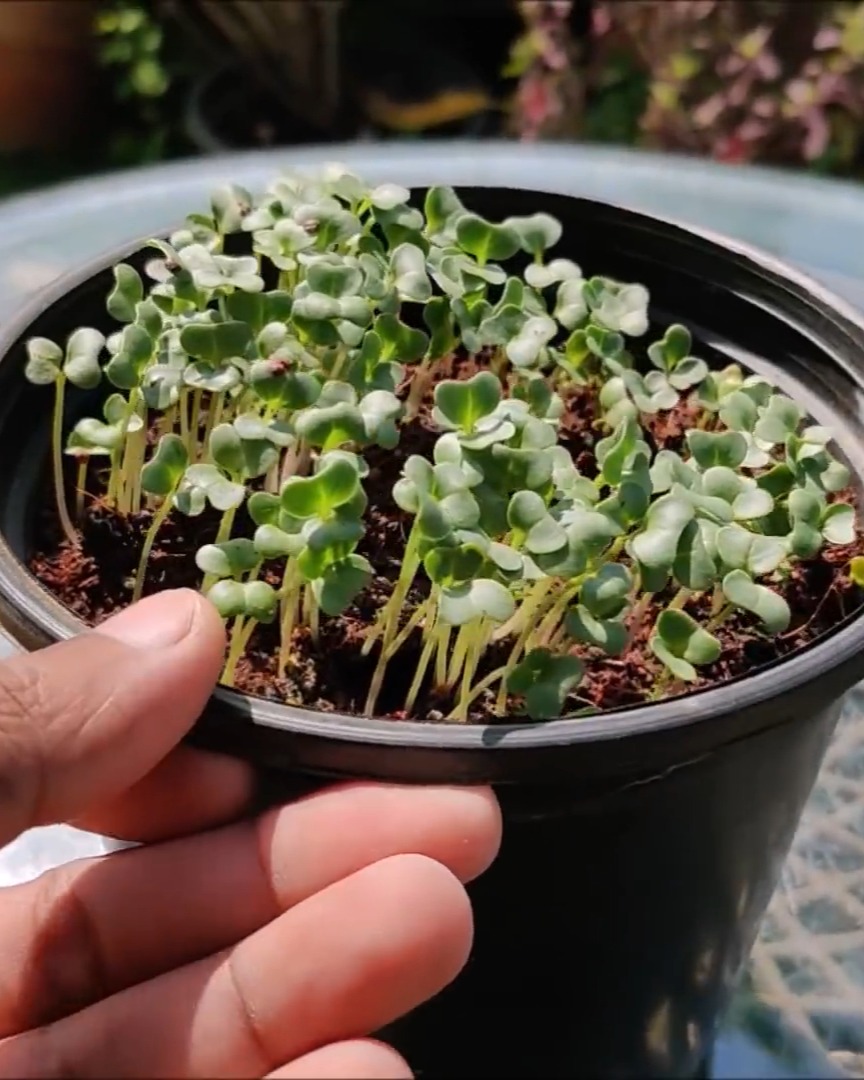
As the seedlings grow, I keep the soil moist by watering gently when it starts to dry. It’s important not to let it dry out or get soggy. Balanced moisture is the key here!
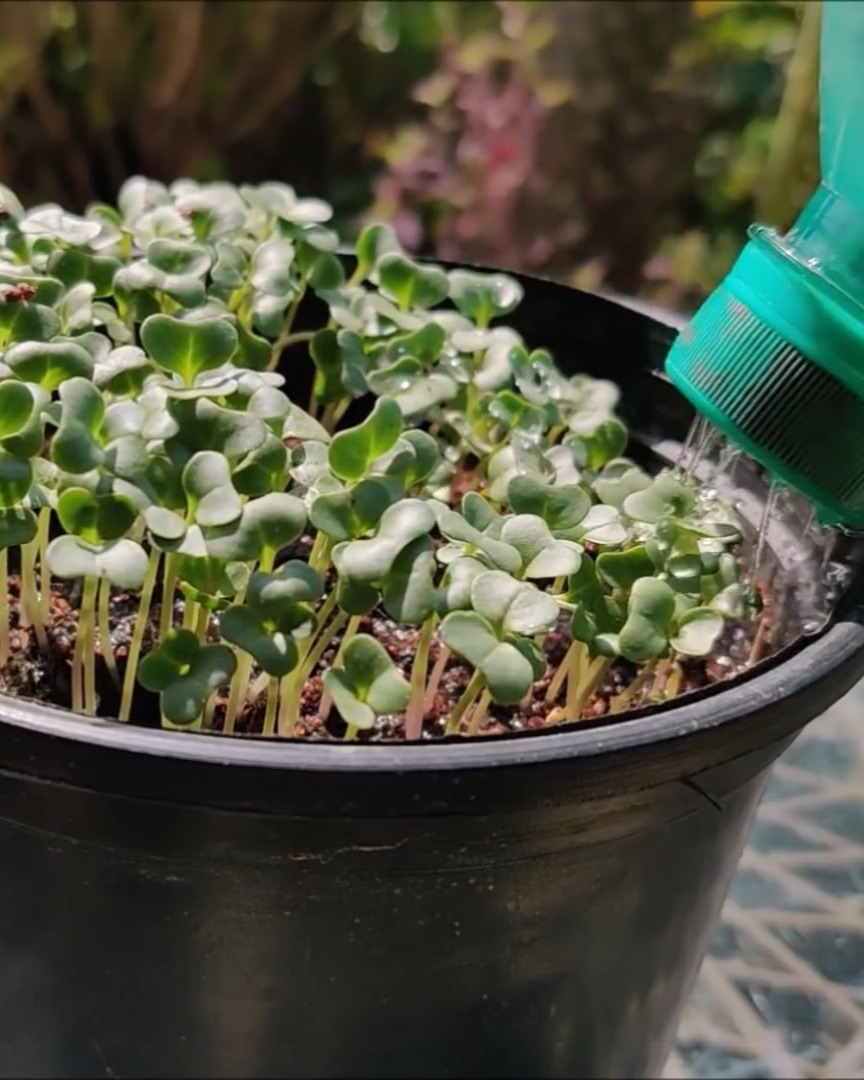
Day 15:
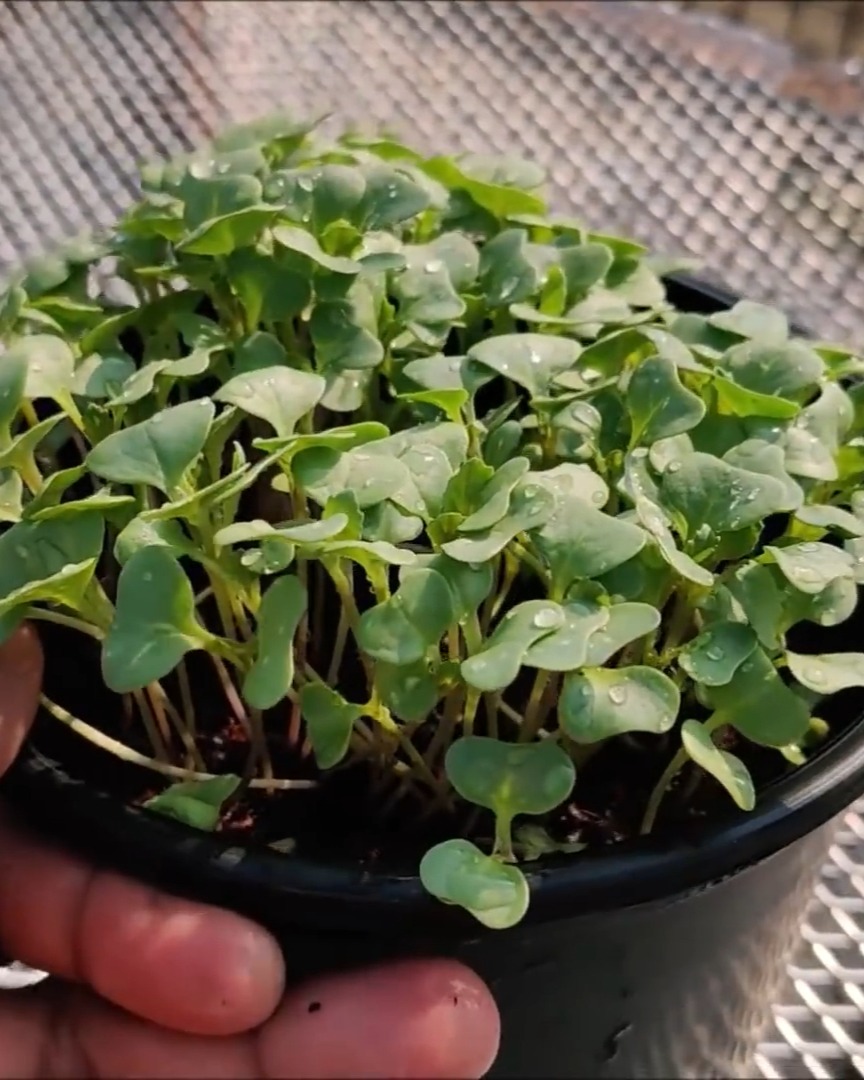
How to Transplant Cabbage Seedlings into Pots
When the seedlings are strong enough, it’s time to move them into larger pots. This is one of my favorite steps!
When Are Cabbage Seedlings Ready to Transplant?
Day 28:
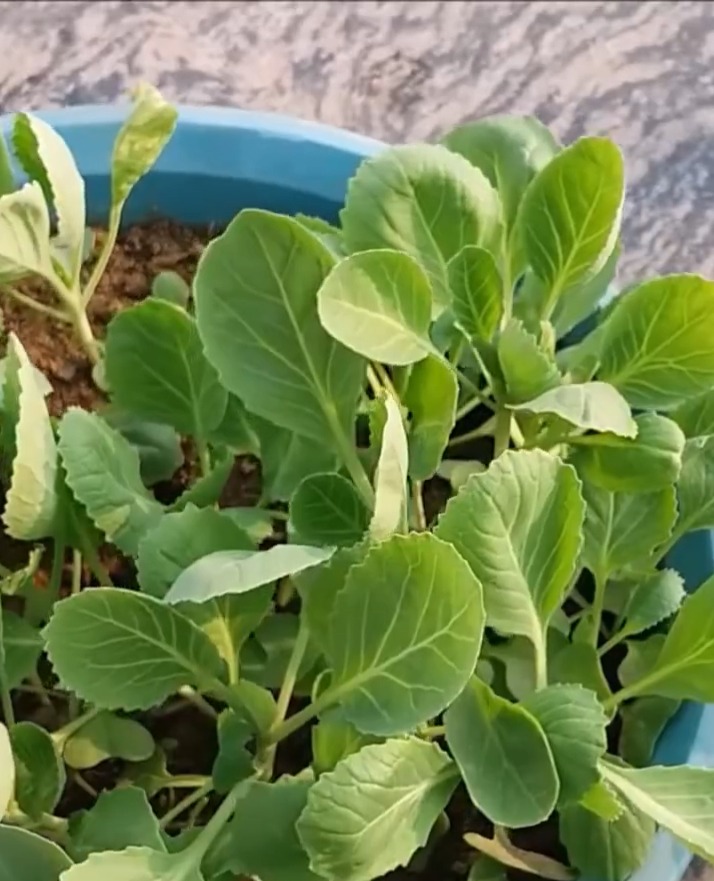
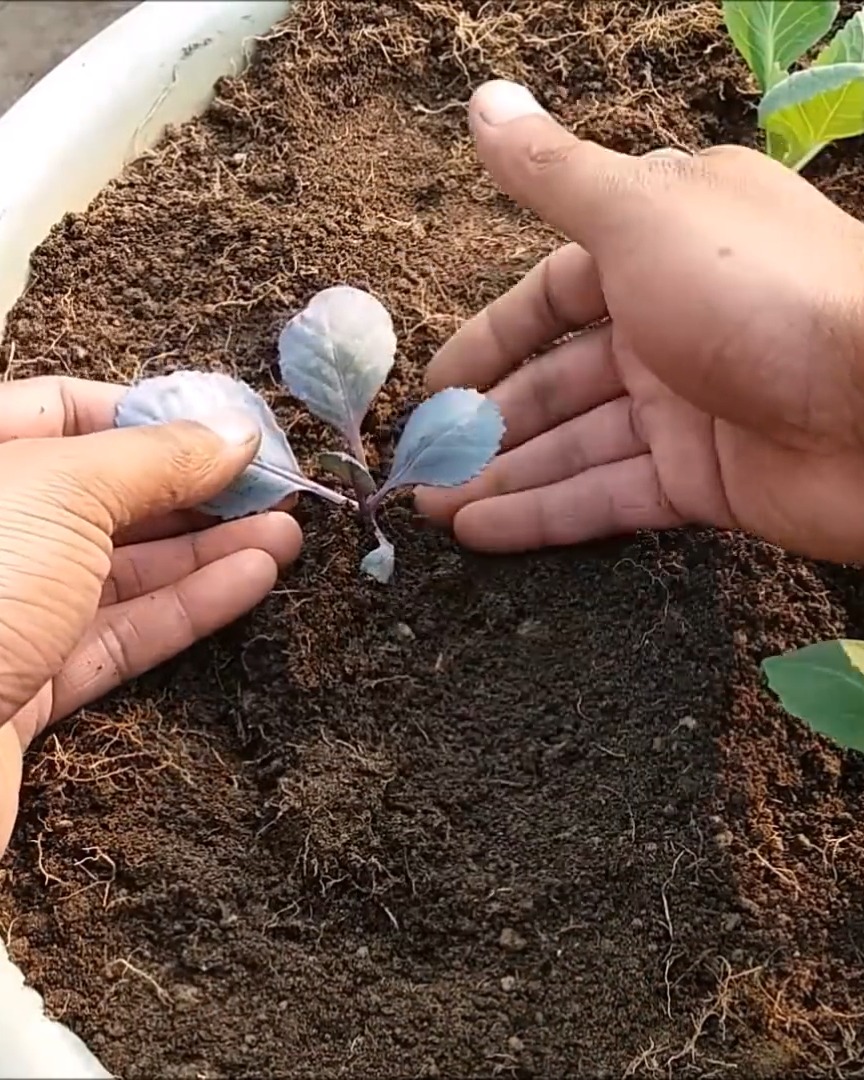
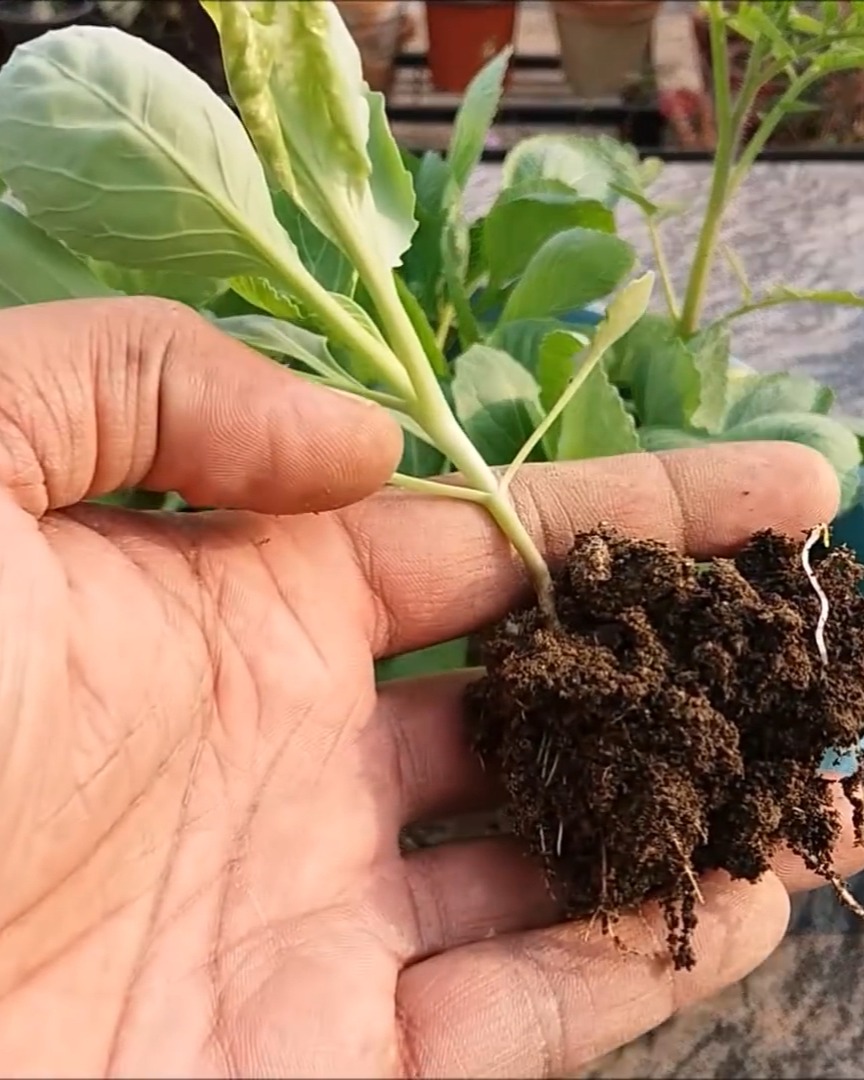
I usually transplant after 3 to 4 weeks, when the seedlings are 3 to 4 inches tall and have 3 to 4 sets of true leaves. That’s when they’re strong enough to handle the move.
Best Pots and Grow Bags for Cabbage Plants
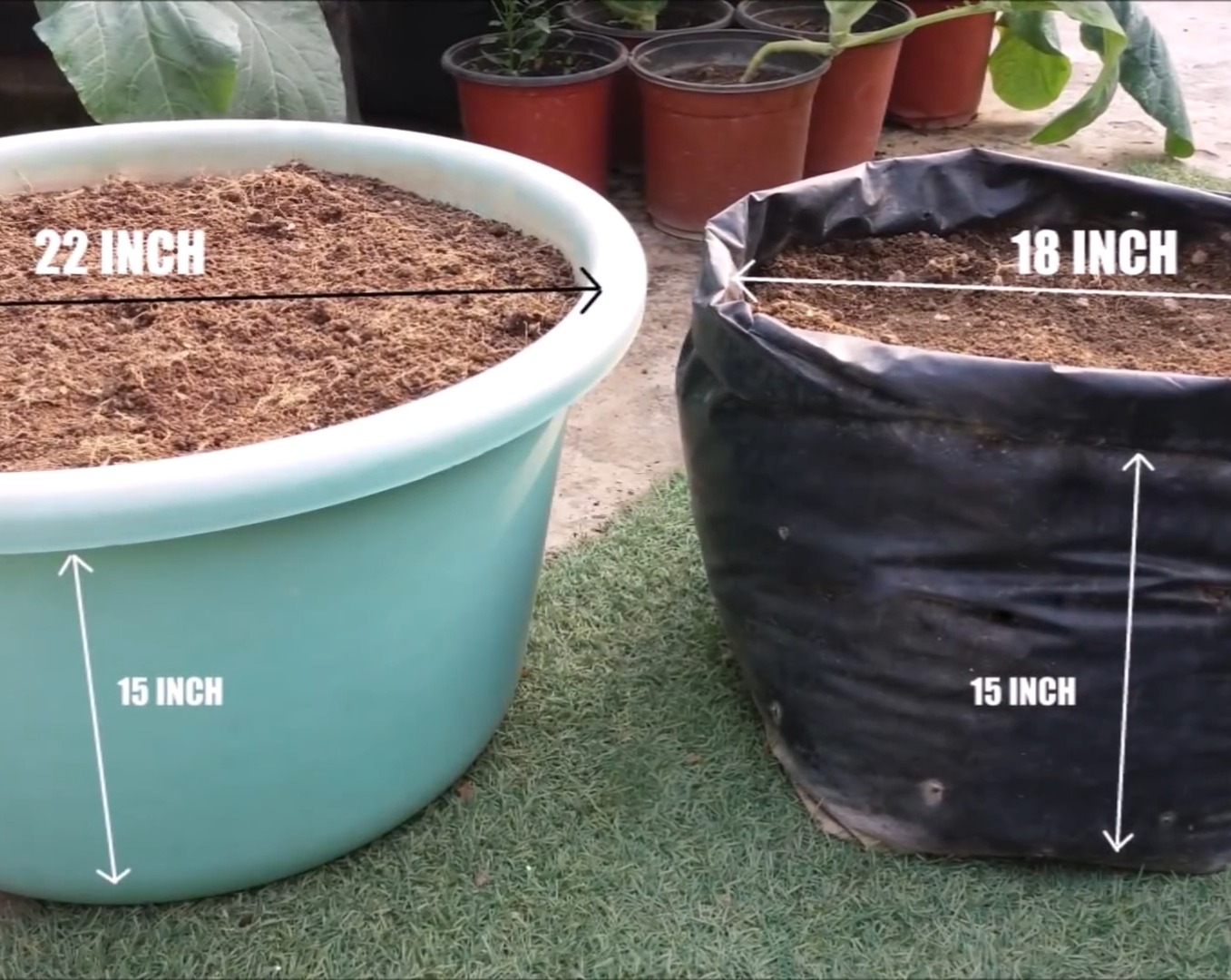
Cabbage has a large root system, so it needs space. I use wide and deep containers—at least 8 to 12 inches.
I usually plant one cabbage per pot, but in bigger containers, I can fit 3 or 4 plants spaced out.
Drainage is crucial here, too. If your pot holds too much water, it can cause rot.
Proper Way to Transplant Cabbage into Containers
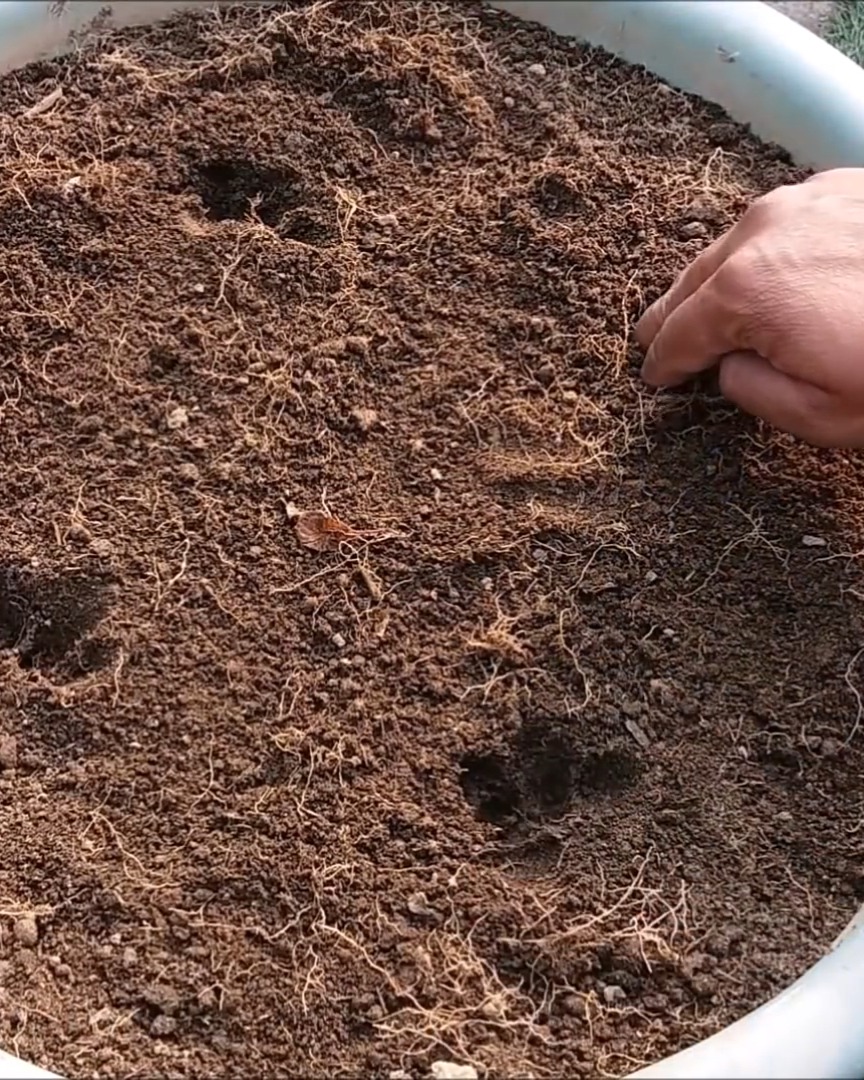
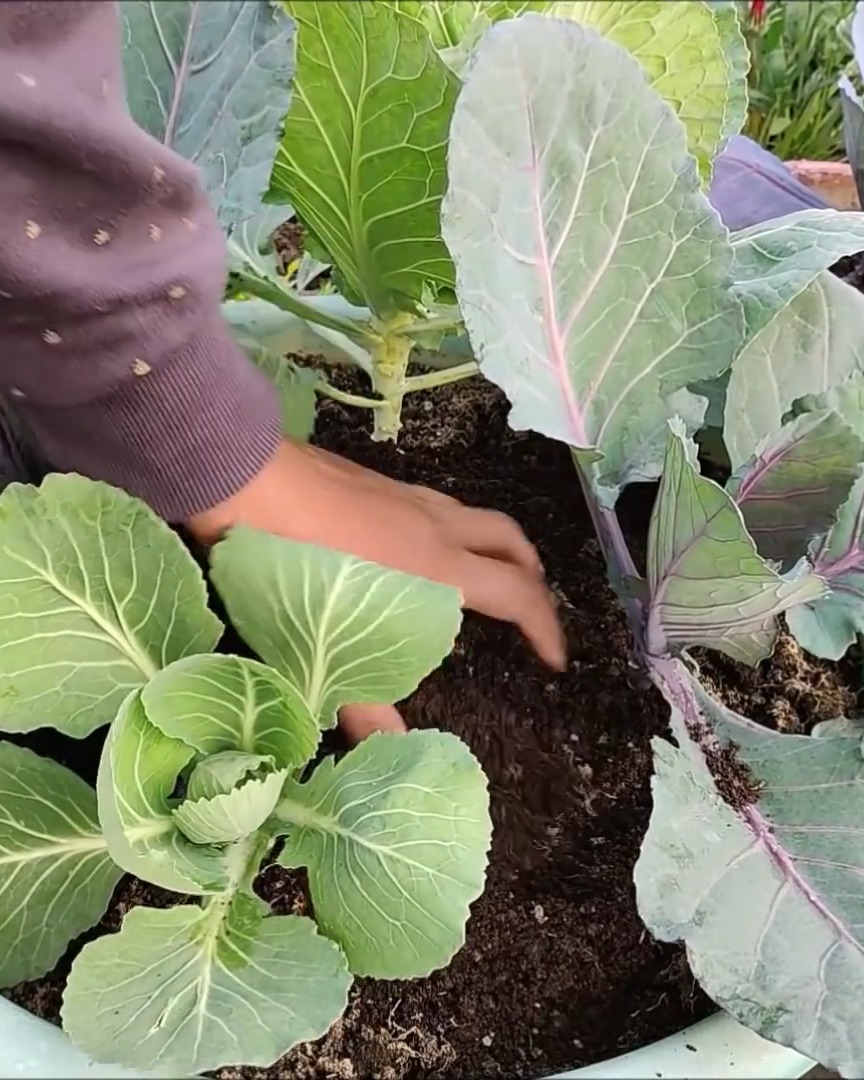
Before planting, I remove the bottom leaves. Cabbage can grow roots along the buried part of the stem, so I plant them a bit deeper.
I dig a hole large enough, place the seedling in, and firm the soil around the stem for support.
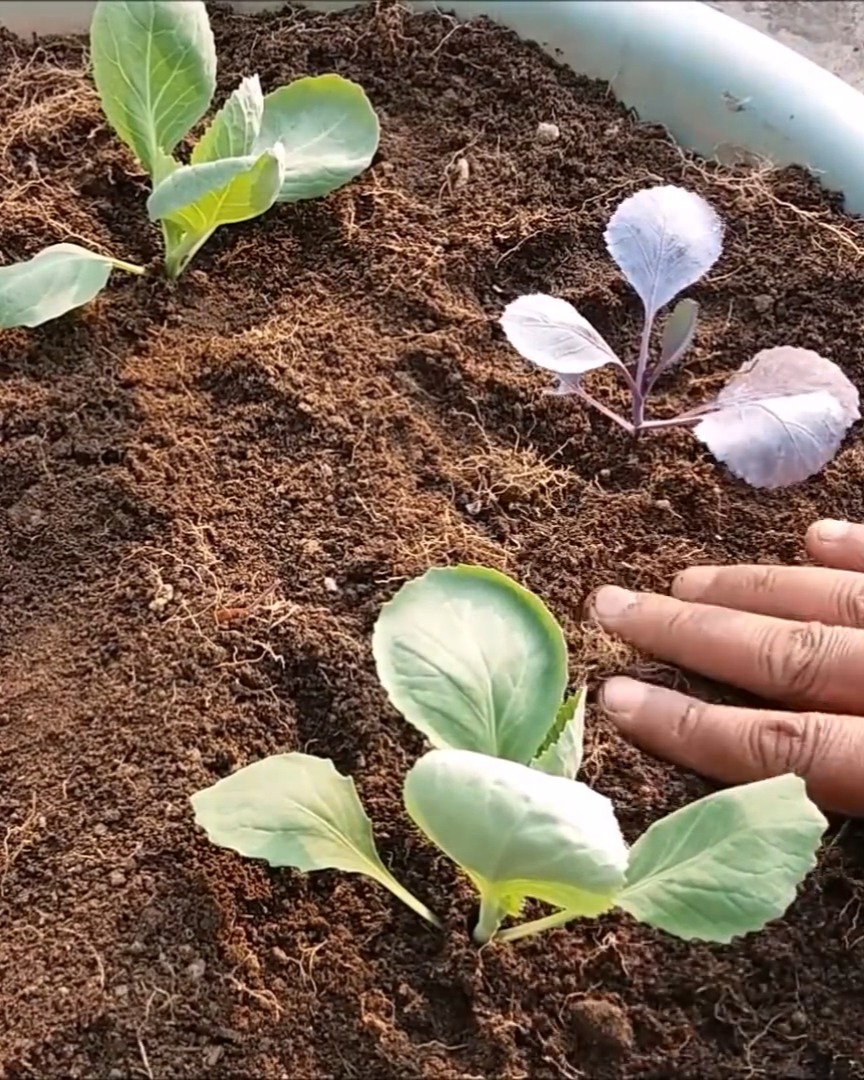
In my grow bag, I space out the plants with 6 to 10 inches between each.
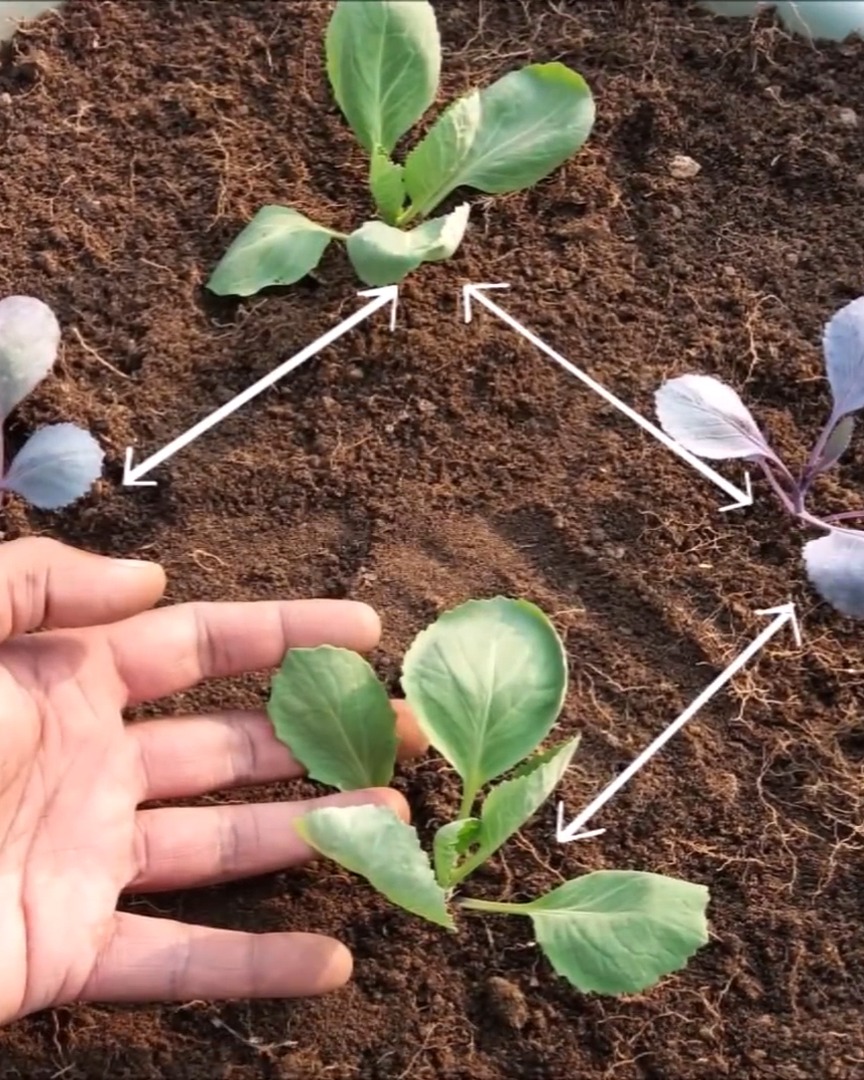
After transplanting, I always water thoroughly to help them settle and avoid transplant shock.
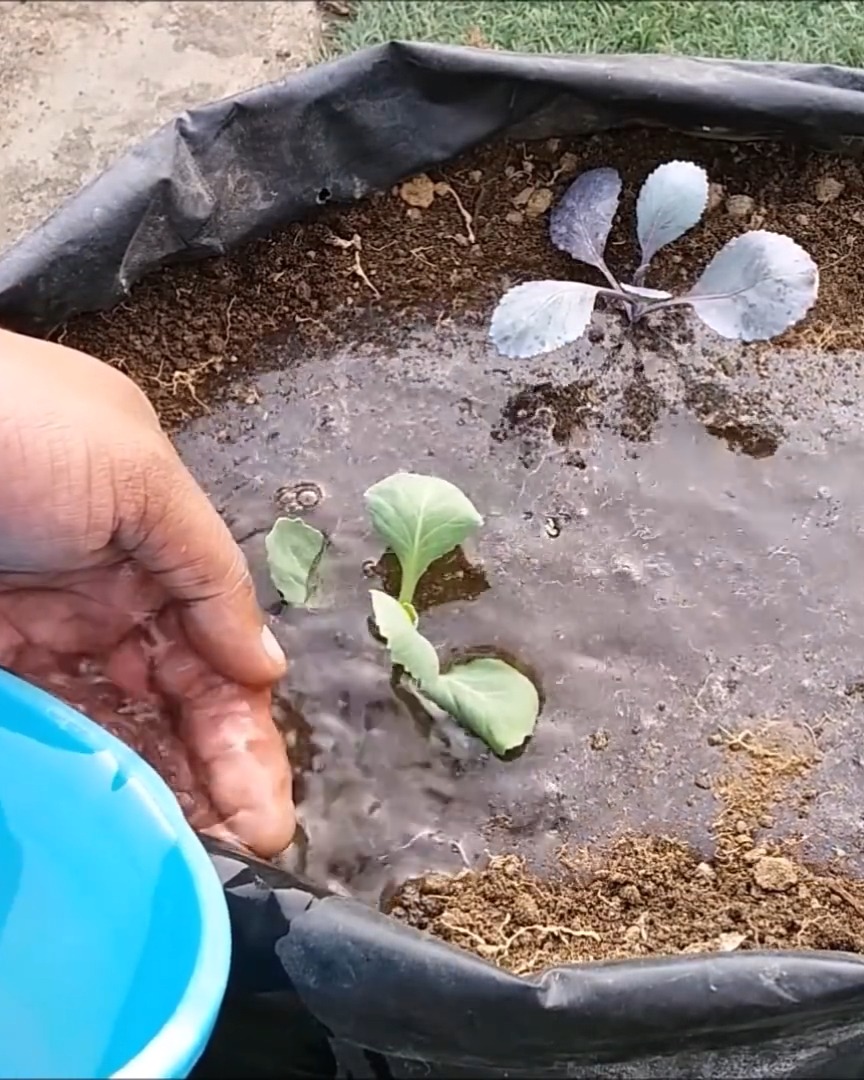
If your plant droops after transplanting, remove one or two bottom leaves. It helps the plant bounce back!
How to Care for Cabbage Plants in Pots
Now it’s all about giving your cabbage the right conditions to grow big, healthy heads.
Sunlight and Pruning Tips for Cabbage Growth
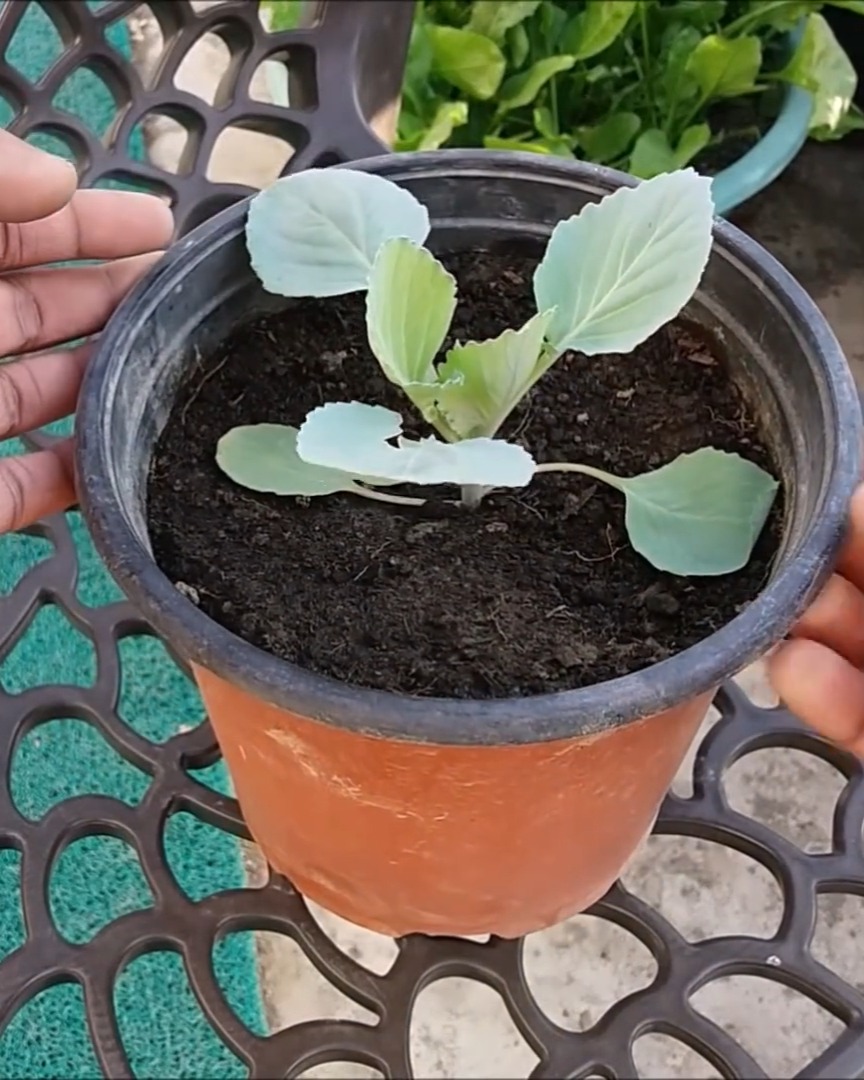
Day 44:
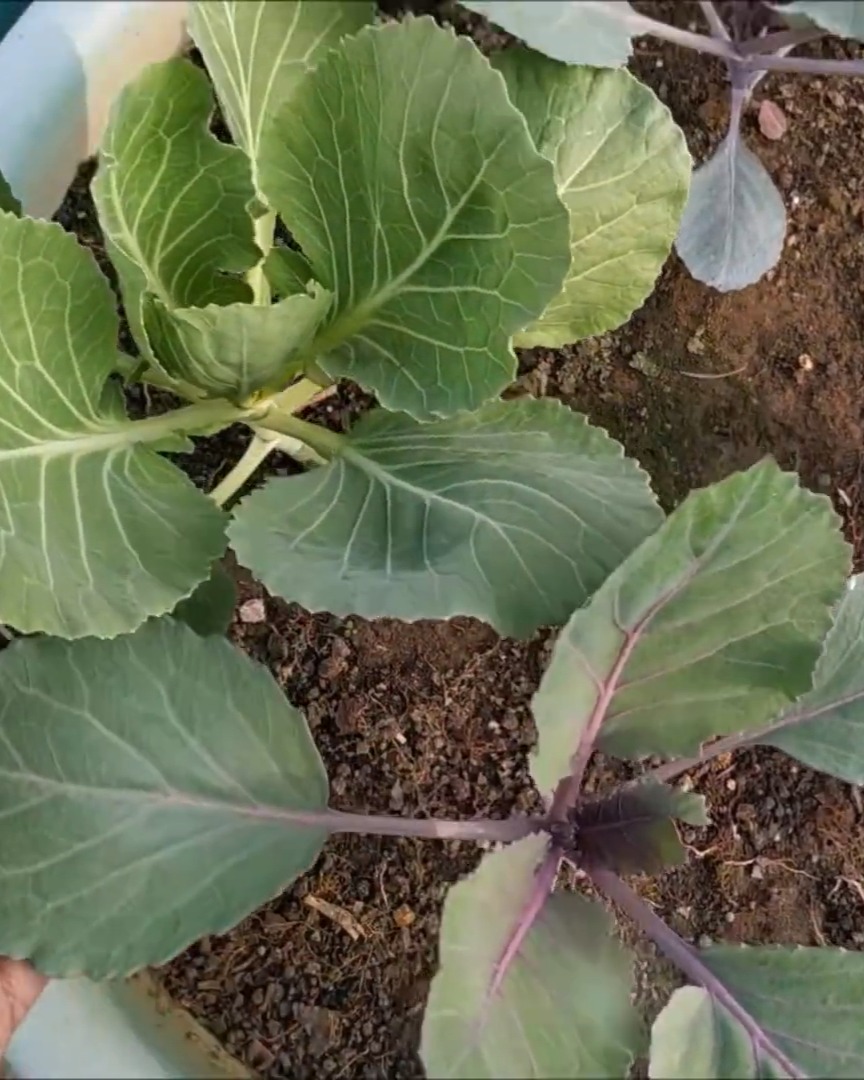
Day 58:
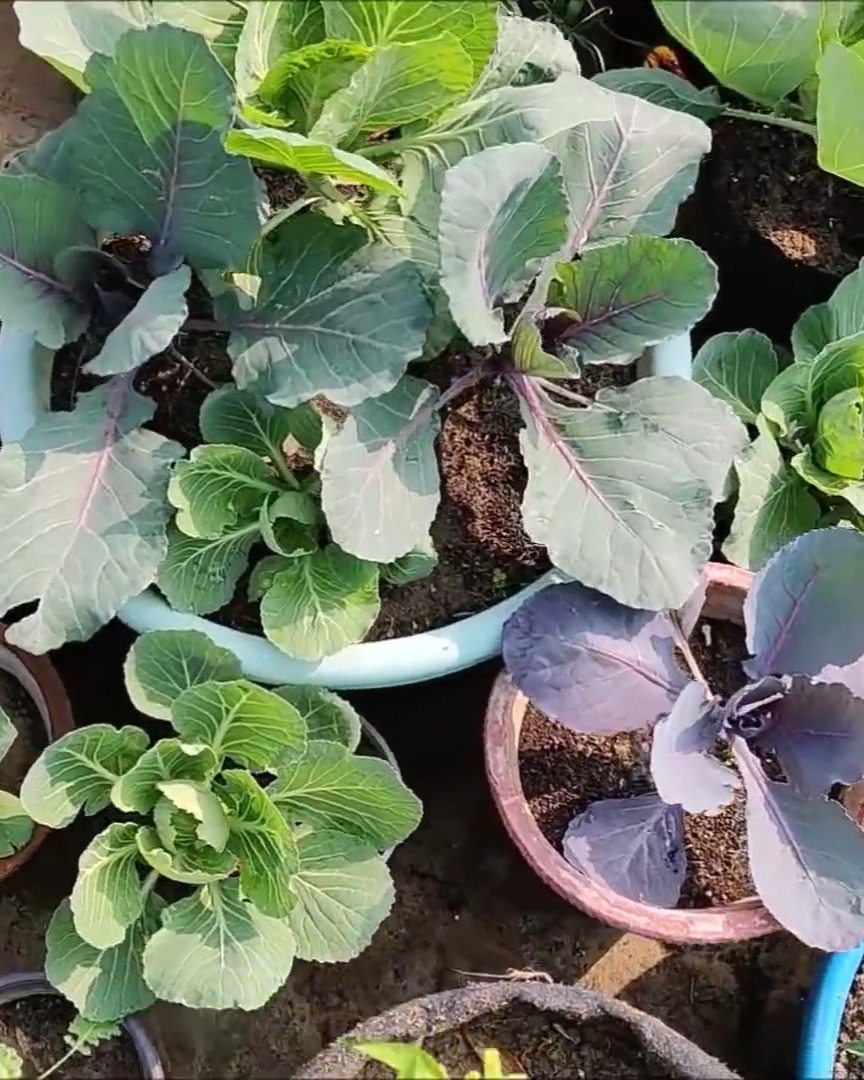
Sometimes, I remove big leaves that shade smaller plants, which lets more light reach all parts of the garden.
Cabbage needs at least 6 hours of direct sunlight every day. The more sunlight it gets, the better the heads grow.
Soil Aeration and Moisture Management
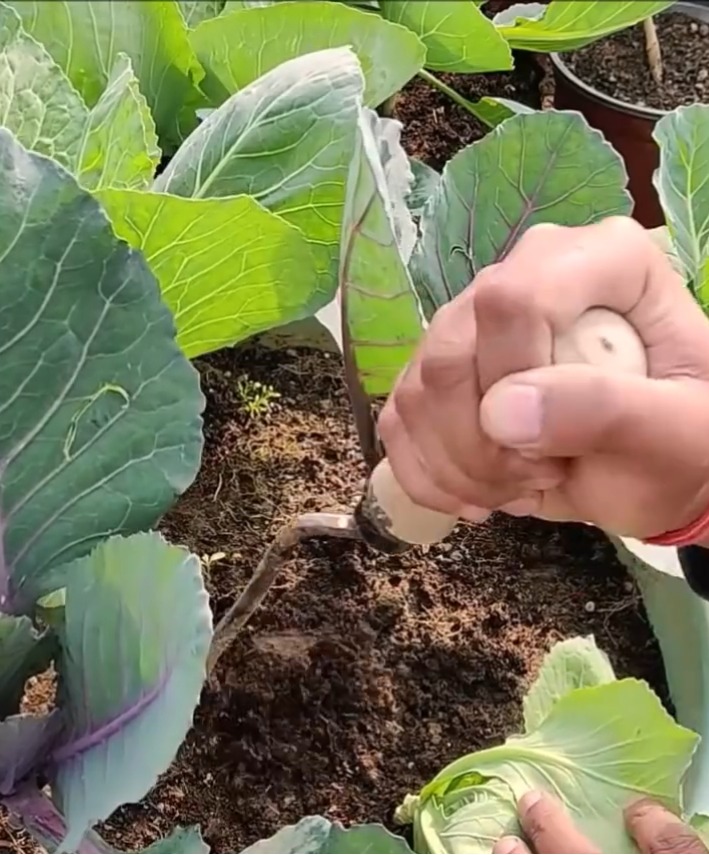
Every 10 to 15 days, I use a small trowel to aerate the soil. This helps oxygen and nutrients reach the roots.
I also keep the soil evenly moist—not too dry, not too wet. Overwatering can stunt the growth.
Best Fertilizer for Cabbage Grown in Containers
To keep them fed, I add a few handfuls of compost every 20 days. I feed my plants with fish emulsion or other dilute organic fertilizers every two weeks.
I do this once the plants grow new leaves and again when they start forming heads.
I prefer mixing compost into the soil—it keeps the nutrients from washing away or burning the plants in direct sunlight.
When and How to Harvest Cabbage Grown in Pots
After weeks of care, it’s time for the best part—harvest!
How to Know When Cabbage Is Ready to Harvest
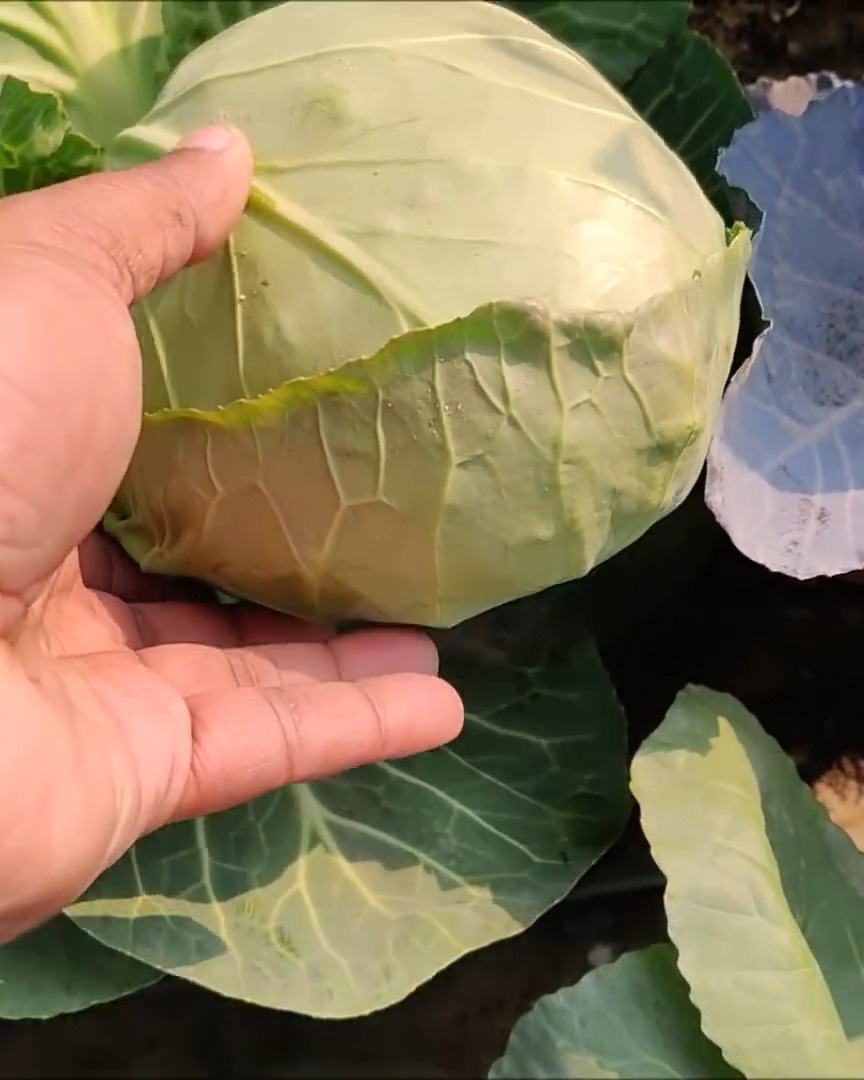
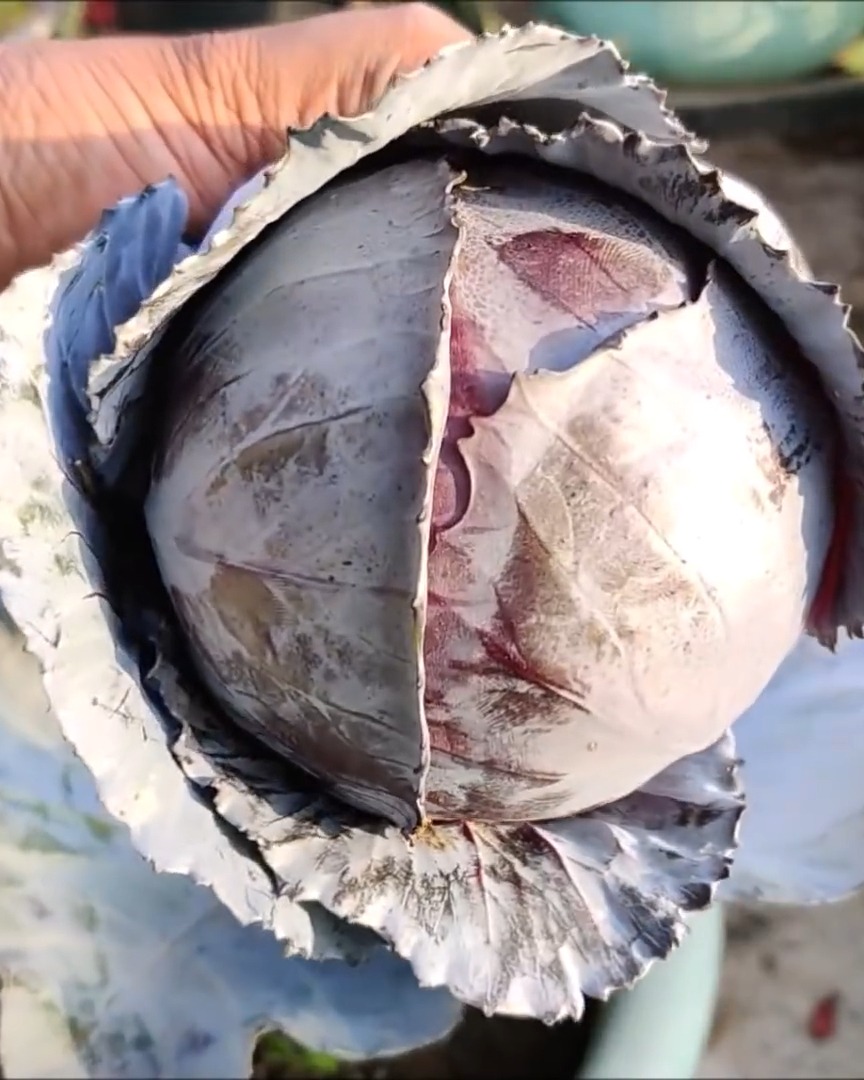
Green cabbage is usually ready in 65 to 75 days from transplanting. Red cabbage takes a bit longer.
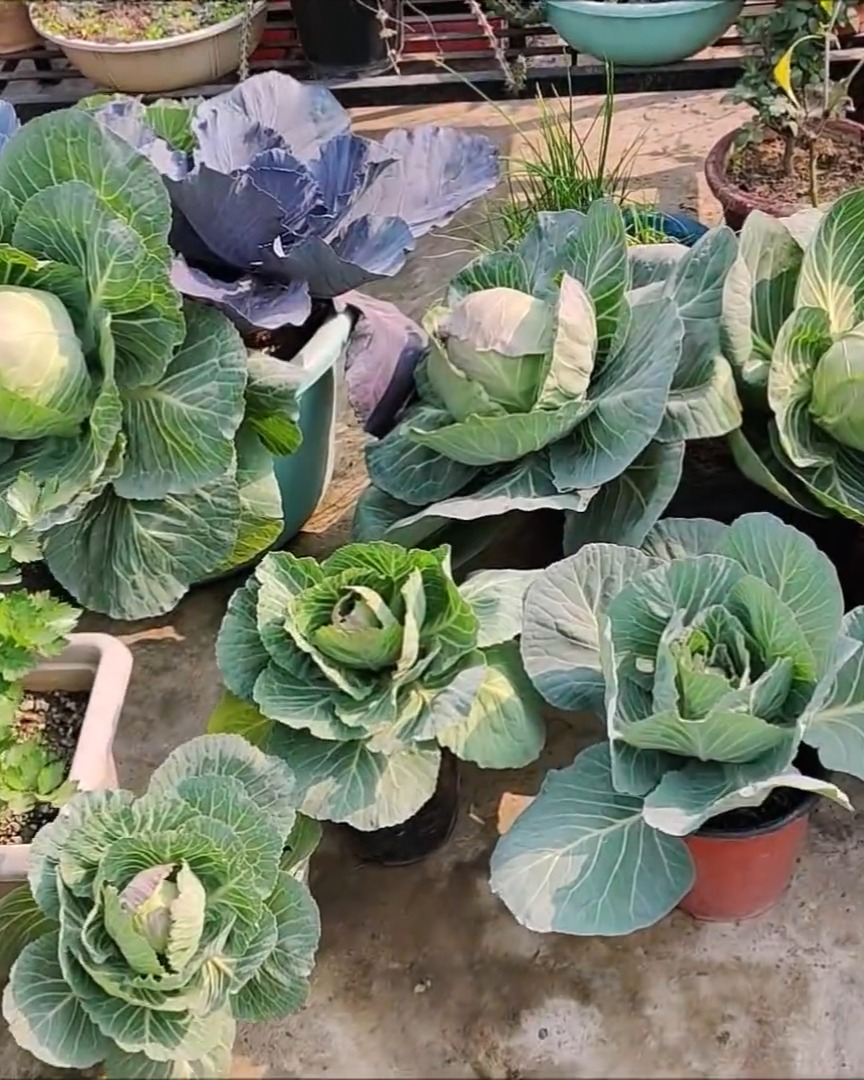
I check the heads by gently pressing them—firm and solid heads mean it’s harvest time!
Step-by-Step Cabbage Harvesting Method
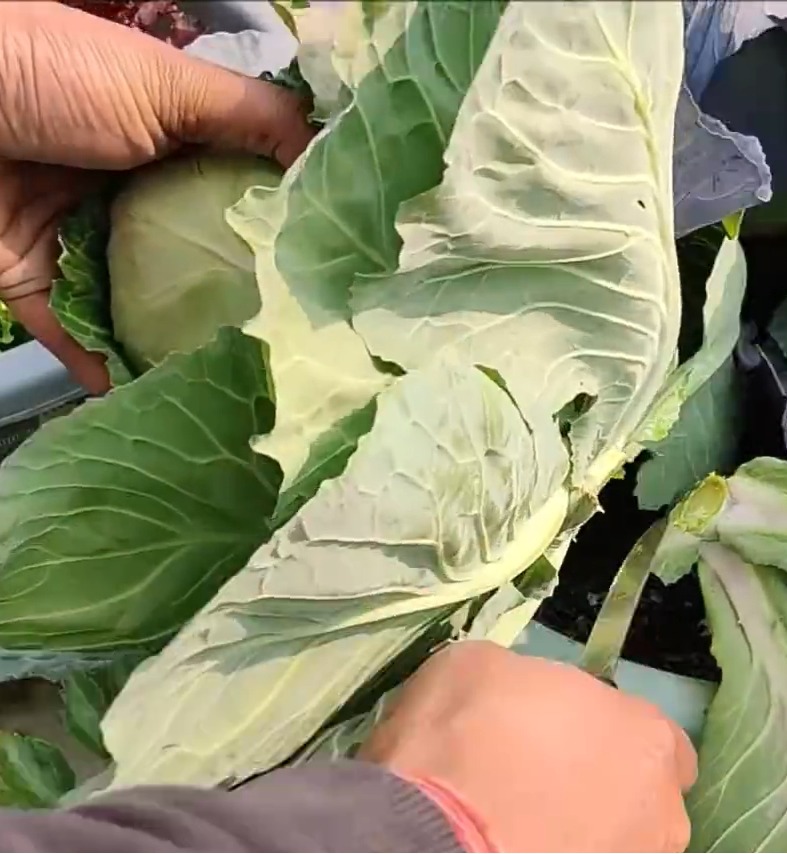
I use a sharp, clean knife and cut the stem above the outer leaves. I try to get as close to the base as possible. If the head still feels soft or loose, I leave it a little longer.
I check every few days around harvest time, just to make sure I don’t miss the perfect moment.
What to Do After Harvesting Cabbage
After cutting the head, I remove the root system to prevent it from rotting. If the plant is healthy, I toss it in the compost bin. If there’s any insect damage or rot, I throw it in the trash.
I also peel off yellow or wilted outer leaves—they’re great for compost too!
Common Cabbage Growing Problems in Containers
Even in containers, cabbage needs some protection. Here’s what I deal with and how.
Cabbage Bolting, Splitting, and Weather Issues
If cabbage stays too long after maturing or there’s heavy rain, the heads may split open.
Also, when temperatures exceed 30°C, cabbage can bolt—that means it starts going to seed. Timing your harvest is everything!
Natural Pest Control for Cabbage Plants
I keep an eye out for cutworms, cabbage worms, slugs, and aphids. When I spot them, I hand-pick them or spray a mild insecticidal soap mixture. It really helps keep things under control naturally.
Final Thoughts
Growing cabbage in pots is simple, fun, and rewarding when you carefully follow each step. From seed to harvest, every stage is a joy to watch! I hope my experience helps you grow your own fresh cabbage at home. Give it a try this season—and feel free to share your results or questions with me!
